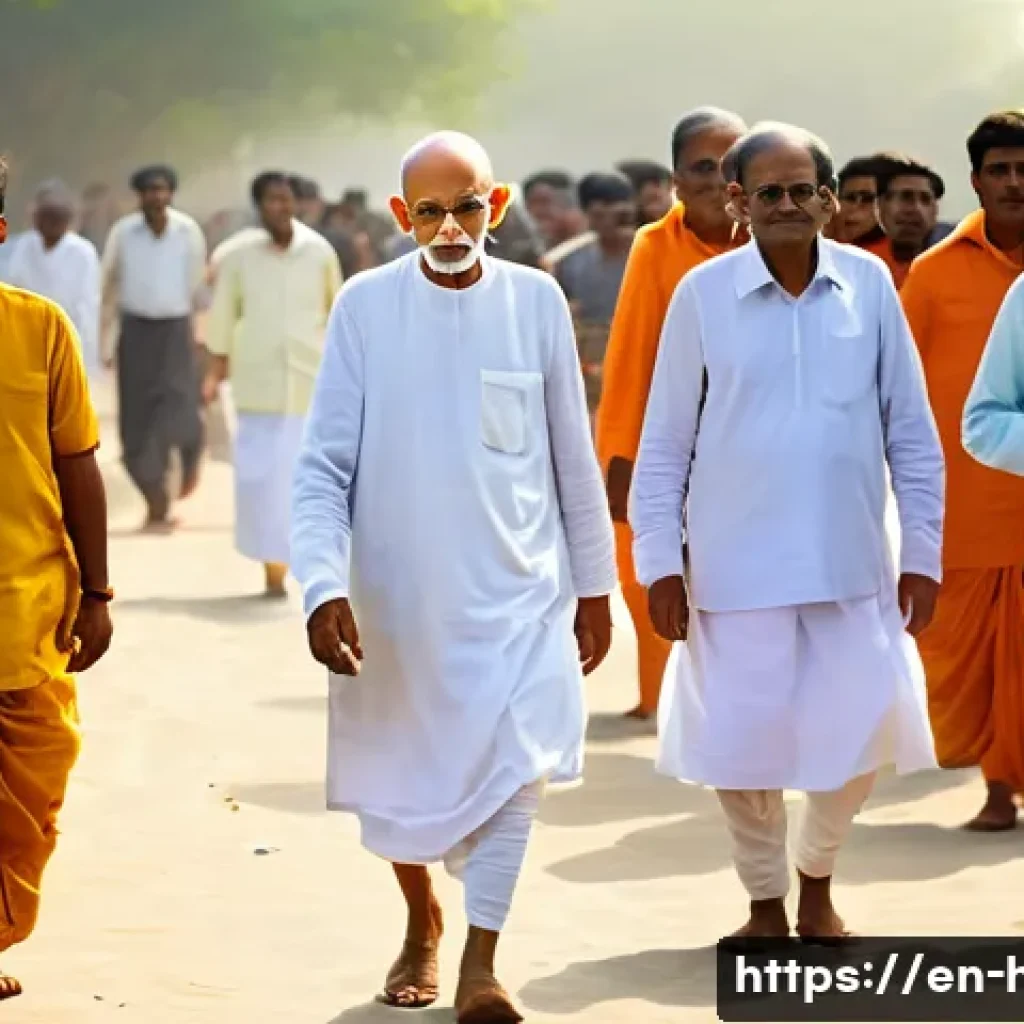
Have you ever paused to think about how some moments in history don’t just pass, but echo through generations, shaping our very understanding of courage and change?
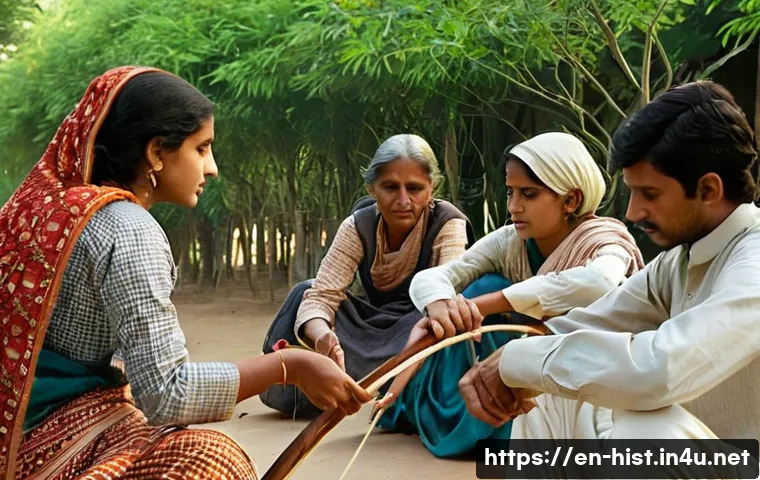
I’ve often found myself reflecting on India’s incredible journey to independence, a story that isn’t just about a nation breaking free, but about the profound power of a single idea.
It’s impossible to talk about this era without immediately picturing Mahatma Gandhi, a man who, against all odds, wielded non-violence as his mightiest weapon.
What truly strikes me isn’t just his success, but how his philosophy, his “Satyagraha” or truth-force, continues to inspire movements for justice and peace across the globe, even in our complex modern world filled with its own unique challenges.
It’s a testament that the lessons from his era are not dusty historical footnotes, but a living blueprint for positive change, proving that immense societal shifts can happen without resorting to conflict.
If you’ve ever wondered how principles like compassion and unwavering resolve can overcome seemingly insurmountable oppression, then you’re in for a treat.
Let’s delve into the remarkable story of India’s independence and Gandhi’s non-violent movement to understand its enduring legacy.
You know, when I think about moments that genuinely shift the course of history, India’s struggle for independence always comes to mind. It’s not just a textbook event; it’s a profound narrative of human spirit and the sheer, unyielding power of a moral stance.
I’ve spent countless hours reflecting on how Mahatma Gandhi managed to rally an entire subcontinent, not with weapons or force, but with an idea so radical it still feels revolutionary today: non-violence.
It makes you wonder, doesn’t it, about the true nature of strength?
The Genesis of a Gentle Revolution: Unpacking Gandhi’s Early Vision
A Radical Idea in a Violent World
It’s easy to look back now and see Gandhi’s path as almost inevitable, but honestly, it was anything but. Imagine living in a world steeped in colonialism, where power was measured by military might and economic control.
In such a climate, advocating for non-violent resistance, for “Satyagraha” or truth-force, must have seemed utterly outlandish to many. I’ve always been fascinated by how he cultivated this philosophy, starting with his experiences in South Africa, where he first encountered firsthand the sting of discrimination and oppression.
He was a lawyer, right? But he quickly transformed into something much more profound, a leader who believed that true change didn’t come from shedding blood, but from awakening the conscience of both the oppressed and the oppressor.
It was there, battling against racist policies, that he began to hone his approach, understanding that the greatest weapon wasn’t a sword, but an unwavering commitment to truth and peaceful defiance.
It reminds me that often, the most powerful ideas are born from personal struggle and a deep-seated refusal to accept injustice.
The Ripple Effect of Personal Conviction
What truly astounds me is how Gandhi’s personal convictions, forged in those challenging years, created such a massive ripple effect. When he returned to India in 1915, he brought with him not just a method, but a way of life that he’d meticulously developed.
It wasn’t about grand political speeches initially; it was about connecting with people, understanding their pain, and showing them a different path to freedom.
The Amritsar Massacre in 1919 was a horrifying turning point, pushing many Indians, who had previously been moderate, to embrace the nationalist cause with renewed fervor.
Gandhi’s genius was to channel that outrage, that deep-seated desire for justice, into organized, non-violent action. He saw that sustained, principled resistance could undermine the very legitimacy of the British Raj.
It’s a powerful lesson, I think, about how one person’s unwavering moral compass can inspire millions to believe in a different future. I mean, who would’ve thought that simply refusing to cooperate could be more potent than an armed rebellion?
Satyagraha: More Than a Slogan, a Lifestyle of Courage
The Inner Strength Behind the Movement
Satyagraha, for Gandhi, wasn’t just a tactic; it was a deeply spiritual and ethical endeavor that demanded immense inner strength. The word itself, “Satyagraha,” beautifully combines “Satya” (truth) and “Agraha” (firmness or insistence), essentially meaning “insistence on truth”.
It wasn’t about passive resignation, but active, truthful resistance, fueled by moral conviction. I’ve always felt that’s where its true power lay – in its capacity to transform the individual as much as the society.
Practicing Satyagraha meant a relentless pursuit of truth, a non-violence of the mind, and a rigorous process of self-scrutiny. It meant being prepared to suffer, not as a victim, but as a conscious choice to highlight injustice and appeal to the conscience of the oppressor.
It also integrated ‘Ahimsa’ (non-violence) and ‘Dharma’ (righteous conduct), principles deeply rooted in ancient Hindu philosophy. This commitment to moral integrity, even in the face of brutal repression, is what I believe gave the movement its incredible resilience.
It’s a humbling thought, isn’t it, to consider such profound self-discipline in pursuit of a collective good?
Practical Applications of Truth-Force
When we talk about the practical applications of Satyagraha, it extends far beyond just grand protests. It’s about how individuals integrated these timeless principles into their daily lives.
Think about honest communication, fostering trust with friends and colleagues – that’s a small act of ‘Satya’ right there. Or considering mindful speech and thought, preferring peaceful dialogue over conflict, which is the essence of ‘Ahimsa’.
These weren’t just abstract concepts for Gandhi’s followers; they were living blueprints for action. From boycotting British goods and institutions to refusing to pay unjust taxes, these actions, seemingly small on their own, collectively chipped away at the foundation of colonial rule.
The aim was always to conquer through conversion, seeking a new harmony rather than outright victory or defeat. This philosophy wasn’t just about making political statements; it was about building a parallel society based on principles of justice and self-reliance.
It reminds me of how powerful everyday choices can be when they align with a larger moral vision.
Echoes of Ahimsa: When Non-Violence Became the Ultimate Weapon
Confronting Empire Without Firing a Shot
It’s genuinely mind-boggling to consider how a movement armed only with non-violence managed to confront and ultimately bring down one of the world’s most formidable empires.
When I picture the scenes of peaceful protestors facing down batons and bullets, it makes my heart ache, but it also fills me with an incredible sense of awe.
The sheer courage it must have taken to stand firm, to refuse to retaliate, to simply absorb the violence without succumbing to it. That, to me, is the ultimate form of strength.
This principle of Ahimsa, or non-injury, deeply embedded in Hindu values, became a political weapon under Gandhi’s guidance. It was a revolutionary approach, making public opinion in Western countries sympathize with the Indian cause and influencing leaders worldwide.
The psychological impact on the British, who were used to conventional warfare, must have been immense. How do you fight an enemy that refuses to fight back but steadfastly demands justice?
It flipped the script entirely, highlighting the moral bankruptcy of the colonial rulers.
The Unseen Battles Won Through Peace
The battles won through non-violence weren’t always visible, explosive confrontations. Many victories were subtle, incremental shifts in public opinion, both domestically and internationally.
The world watched, often horrified, as peaceful Indians were met with brutal force for simply asserting their rights. This dramatically undermined the legitimacy of British rule and garnered widespread sympathy for the Indian cause.
Research even suggests that nonviolent campaigns are about twice as likely to succeed as violent ones and lead to more stable democracies. It’s a testament to the idea that lasting change often comes from changing hearts and minds, not just overpowering physical force.
Gandhi’s methods also fostered self-discipline and self-reliance among the Indian people, empowering the masses and building a strong sense of national unity.
I really believe that the strength of the movement wasn’t just in what they resisted, but in what they built: a collective consciousness rooted in peace and justice.
The Daily Grind of Defiance: What it Really Meant to Follow Gandhi
The Personal Sacrifices of a Nation
Following Gandhi was no easy feat; it demanded profound personal sacrifices from millions of ordinary people. When I delve into the stories of individuals who participated, I’m always struck by the sheer bravery it took.
We’re talking about boycotting British goods, which often meant giving up everyday necessities and enduring economic hardship. It meant refusing to work in British institutions, resigning from government posts, and pulling children out of colonial schools, all of which had immediate and severe consequences for families.
People faced imprisonment, beatings, and even death for their peaceful acts of defiance. I can only imagine the fear, but also the resolute determination, that must have filled their hearts.
It wasn’t just about showing up for a march; it was about transforming every aspect of one’s life to align with the struggle for freedom. This level of commitment, this willingness to endure personal suffering for a greater cause, is what truly defined the movement.
Building Community Through Shared Struggle
But amidst these incredible sacrifices, something beautiful emerged: a profound sense of community forged through shared struggle. When people collectively refused to cooperate with an unjust system, they created their own networks of support, solidarity, and self-sufficiency.
Imagine families coming together to spin their own cloth (Khadi) in defiance of British textile imports, or communities organizing local schools and arbitration courts.
These acts weren’t just protests; they were acts of creation, building the foundations of an independent India even before the British left. It’s like building a new society within the shell of the old one.
This shared experience of resistance, of mutual aid and collective defiance, strengthened the bonds between people from different backgrounds, fostering a powerful sense of national identity.
It’s a wonderful example of how adversity can bring people together and how unity, born from shared purpose, can become an unstoppable force.
From Salt Marches to Global Movements: Gandhi’s Blueprint for Change
Iconic Moments That Defined an Era
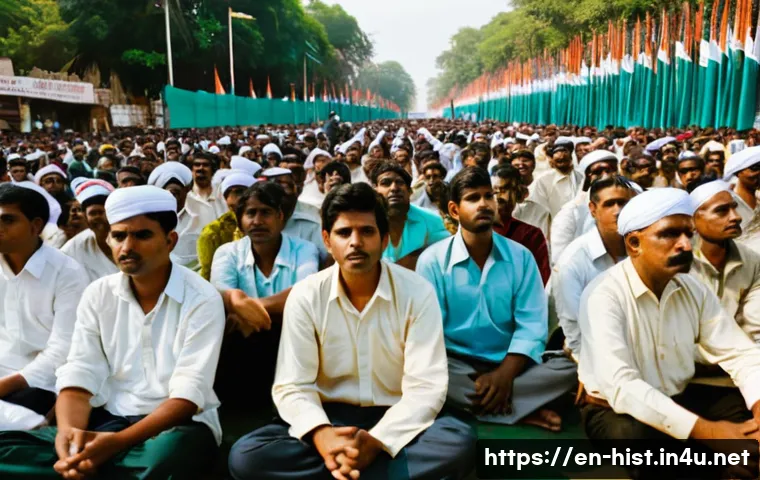
When I think about the enduring image of Gandhi, the Salt March immediately springs to mind. It’s such an iconic moment, isn’t it? In 1930, Gandhi and his followers marched over 240 miles to the Arabian Sea to illegally make salt, openly defying the British monopoly on salt production.
This wasn’t just about salt; it was a symbolic act against an unjust law that affected every Indian, rich or poor. The images of thousands of people joining him, scooping up salt from the mud, and facing brutal repression for it, resonated globally.
It was a brilliant move, simple yet profoundly effective, capturing the imagination of the world and galvanizing the Indian populace. Beyond the Salt March, there was the Non-Cooperation Movement in the early 1920s, urging Indians to boycott British products, courts, and institutions, and later the Quit India Movement in 1942, demanding an end to British rule.
These weren’t isolated events; they were strategically planned campaigns that demonstrated the power of collective non-violent action.
Inspiring Leaders Far Beyond India
What’s truly incredible is how Gandhi’s blueprint for change extended far beyond India’s borders. His philosophy of nonviolent resistance, or Satyagraha, didn’t just liberate a nation; it provided a universal model for challenging injustice and oppression.
I often reflect on how leaders like Martin Luther King Jr. in the United States and Nelson Mandela in South Africa were directly inspired by Gandhi’s methods.
King famously studied Gandhi’s teachings and applied them to the American Civil Rights Movement, leading peaceful protests and demonstrations that ultimately led to landmark legislation.
Similarly, Mandela and the anti-apartheid movement in South Africa embraced non-violent resistance, even though the path was long and arduous. It’s a powerful testament to the timelessness of Gandhi’s principles that they continue to resonate with activists and peacemakers across the globe, providing a blueprint for positive change without resorting to conflict.
| Key Non-Violent Actions | Year(s) | Impact |
|---|---|---|
| Champaran Satyagraha | 1917 | First major act of civil disobedience in India; challenged oppressive indigo farming practices and high taxes. Led to the end of the ‘tinkathia’ system. |
| Non-Cooperation Movement | 1920-1922 | Mass protest boycotting British goods, institutions, and services. Aimed to dismantle colonial rule and foster self-reliance. |
| Salt Satyagraha (Dandi March) | 1930 | Symbolic march against the British salt tax, inspiring widespread civil disobedience and garnering international attention. Led to mass arrests and increased support for independence. |
| Quit India Movement | 1942 | A call for the immediate end of British rule, leading to mass uprisings and further arrests, solidifying India’s demand for independence. |
The Human Element: The Sacrifices and Triumphs of a Nation’s Soul
The Unsung Heroes and Heroines
When we talk about India’s independence, it’s not just about Gandhi; it’s about the millions of unsung heroes and heroines who embodied his philosophy.
I’ve always felt it’s crucial to remember that behind every major movement are countless individuals whose names might not be in history books, but whose courage paved the way for freedom.
Think of the women who actively participated in protests and faced imprisonment, like Matangini Hazra, who was martyred during the Quit India Movement and became known as “Gandhi Buri” (The Old Gandhian Woman).
Or figures like Durgawati Devi, who assisted in the escape of revolutionaries and participated in armed resistance when she felt it was necessary, showcasing the diverse forms of defiance.
These are the personal stories that truly bring history to life for me, reminding me that change is always a collective effort, powered by the resilience and spirit of ordinary people doing extraordinary things.
Their sacrifices, their unwavering belief, built the bedrock of a new nation.
The Emotional Toll and Ultimate Victory
The path to independence was long and fraught with immense emotional toll, marked by widespread violence, suffering, and the tragic partition of India and Pakistan in 1947.
It wasn’t a clean, simple victory; it was complex, deeply painful, and left scars that persist to this day. I often ponder the emotional burden carried by those who lived through such tumultuous times – the loss of loved ones, the displacement, the communal tensions.
Yet, amidst all this, the ultimate triumph of independence in 1947 was a monumental achievement, a testament to the enduring power of sustained, non-violent resistance.
It proved that even against seemingly insurmountable odds, a determined populace, guided by moral principles, can achieve self-determination. The joy of freedom, I imagine, must have been intertwined with profound sorrow, a bittersweet victory born from decades of struggle.
It reminds us that even the greatest triumphs come with their own heavy cost.
Beyond the History Books: Why Gandhi’s Wisdom Still Resonates Today
Navigating Modern Challenges with Ancient Principles
It’s easy to relegate historical figures to dusty textbooks, but Gandhi’s wisdom feels more relevant than ever in our complex modern world. I mean, we’re constantly bombarded with challenges, aren’t we?
From social injustices to environmental crises, it often feels like we’re caught in a spiral of conflict and division. But then I remember Gandhi’s core principles – truth, non-violence, and self-suffering for a cause – and they offer such a powerful counter-narrative.
His emphasis on non-cooperation with unjust systems, for instance, still informs modern protest movements, from climate activism to civil rights struggles around the globe.
His philosophy encourages us to examine our own actions, to uphold integrity, and to seek peaceful solutions even when faced with aggression. It’s a call to proactive engagement, not passive acceptance, and it makes me think about how we can all apply a little “Satyagraha” in our daily lives, striving for change not through force, but through unwavering moral conviction.
My Personal Takeaway: How These Lessons Empower My Own Life
For me, personally, Gandhi’s story isn’t just a historical event; it’s a profound source of inspiration that truly empowers how I approach challenges in my own life.
I’ve learned that standing up for what’s right doesn’t always require a loud voice or aggressive tactics. Sometimes, the most impactful action is a quiet, persistent refusal to compromise on your values, to insist on truth even when it’s uncomfortable.
His journey has shown me the incredible strength that lies in empathy, in seeking to understand, and in the unwavering belief that appealing to the better angels of human nature can, eventually, lead to transformative change.
It’s a reminder that every small act of integrity, every decision to choose peace over conflict, contributes to a larger tapestry of positive impact. If a frail man in a loincloth could rally millions to peacefully dismantle an empire, then surely, we too have the power to create meaningful change in our communities and in the world around us, simply by holding fast to our own truth and practicing compassion.
Closing Thoughts
You know, diving deep into Gandhi’s journey always leaves me with a profound sense of awe. It’s more than just a historical account; it’s a living testament to the incredible power of human spirit and the revolutionary potential of non-violence.
When I reflect on how one man, armed only with conviction and a belief in truth, could inspire millions to peacefully dismantle an empire, it honestly makes me believe that anything is possible.
His story isn’t just about India’s independence; it’s a timeless blueprint for how we can all approach conflict, seek justice, and foster understanding in our own lives and communities.
It’s a powerful reminder that true strength often lies not in physical might, but in unwavering moral courage and compassion.
Useful Information to Know
1. Did you know that Gandhi’s ashrams, like the Sabarmati Ashram in Ahmedabad, weren’t just residential communities but active centers for social reform and political organization? Life there was incredibly disciplined, focused on self-sufficiency, truth, and non-violence, or Ahimsa. Imagine waking up before dawn for prayers, participating in manual labor, spinning your own cloth (Khadi), and engaging in deep philosophical discussions. It was a rigorous training ground for Satyagrahis, teaching them practical skills for a self-reliant India while simultaneously cultivating inner strength and moral purity. This communal living was a crucial element in building the movement’s solidarity and preparing activists for the hardships they would face, truly embodying the principles he preached on a daily basis.
2. Gandhi’s influence didn’t just end with India’s independence; his principles of nonviolent resistance continue to inspire movements for social justice and peace around the world even today. Think about modern environmental activism, for instance, where groups often employ civil disobedience tactics like peaceful protests, boycotts, and non-cooperation to raise awareness and pressure governments or corporations. Or consider movements advocating for human rights and democratic freedoms, which frequently draw on the strategies of peaceful demonstrations and moral appeals to conscience that Gandhi pioneered. It’s a powerful testament to the timeless nature of his methods, proving that change can indeed be achieved through peaceful means, even in the face of daunting challenges, showing that the legacy of Satyagraha is truly global.
3. Beyond political independence, Gandhi envisioned “Swaraj” as a holistic concept of self-rule, extending to individual self-governance, communal harmony, and economic self-reliance. It wasn’t just about throwing off British rule; it was about creating a society where every individual was truly free, morally upright, and capable of managing their own affairs. This meant empowering villages, promoting local industries like Khadi to reduce dependence on foreign goods, and fostering unity across religious and caste lines. For Gandhi, true freedom meant liberation from internal prejudices and external exploitation, allowing individuals and communities to realize their fullest potential. It’s a much deeper, more profound idea than simply electing one’s own leaders, really emphasizing a spiritual and ethical dimension to freedom.
4. It’s fascinating to consider how deeply Gandhi’s ideas resonated with and influenced Western thinkers and activists. For example, the American philosopher Henry David Thoreau’s essay “Civil Disobedience” was a major inspiration for Gandhi, particularly its emphasis on moral resistance to unjust laws. Later, Gandhi’s own work profoundly impacted numerous figures in the West, from pacifists and religious leaders to civil rights activists. Intellectuals debated his strategies, seeing in them a powerful alternative to violent revolution, and his life story sparked a re-evaluation of Western notions of power and morality. His philosophy challenged the very foundations of how many in the West understood political action and ethical leadership, prompting significant shifts in thinking about social change and conflict resolution on a global scale.
5. While Gandhi is revered globally, it’s also important to acknowledge that his methods and ideologies have faced scrutiny and critique. Some argue that his emphasis on non-violence was only effective against an adversary like the British Empire, which, despite its flaws, was susceptible to international public opinion and internal moral debate, suggesting it might not work against more ruthless regimes. Others point to his views on caste, though evolving, as sometimes being seen as less radical than some of his contemporaries. There are also discussions around the partition of India and the immense violence that accompanied it, with some historians questioning whether a different strategy might have led to a less tragic outcome. Understanding these complexities doesn’t diminish his monumental achievements but enriches our understanding of a truly nuanced historical figure and the profound challenges he faced.
Key Takeaways
The incredible journey of Mahatma Gandhi and India’s struggle for independence offers such powerful, enduring lessons for us all. What truly stands out for me is the revolutionary idea that non-violence, or Ahimsa, isn’t weakness but an immense source of moral and strategic power, capable of confronting even the most formidable empires.
It’s a testament to the belief that truth, conviction, and a willingness to suffer for a cause can ultimately transform hearts and minds, leading to genuine, lasting change.
This story isn’t just about a moment in history; it’s a timeless blueprint for how peaceful resistance, self-reliance, and unwavering moral courage can indeed shape a better future for humanity.
Frequently Asked Questions (FAQ) 📖
Q: What exactly was “Satyagraha” and how did this unique approach actually help India gain its independence?
A: Ah, Satyagraha! When I first learned about it, I remember thinking, “Could something so seemingly gentle be so powerful?” The term itself, coined by Gandhi, beautifully combines two Sanskrit words: “Satya” meaning truth, and “Agraha” meaning insistence or holding firmly to.
So, at its very core, Satyagraha is about “truth-force” or “soul-force.” It’s not just passive resistance, as some might mistakenly believe; it’s an active, deeply committed non-violent resistance to injustice.
Gandhi himself described it as a quest to “wean the opponent from error by patience and compassion,” even if it meant enduring suffering oneself. It’s a tough concept to fully grasp because it asks for immense moral courage, a willingness to suffer without retaliating, and an unwavering belief in the inherent goodness of even your oppressor.
How did this work in practice for India? Well, Gandhi didn’t just talk about it; he lived it and mobilized millions. Imagine widespread campaigns of civil disobedience: people refusing to cooperate with unjust laws, boycotting British goods and institutions like schools and courts, and even making their own salt in defiance of a colonial tax that hurt the poorest families.
The Salt March of 1930 is a perfect example that always gives me goosebumps. Gandhi, then 61, led thousands on a 240-mile trek to the Arabian Sea to illegally make salt.
It wasn’t about the salt itself, but the powerful symbolism of defying an oppressive law and igniting a sense of shared purpose and identity across India.
The British authorities responded with arrests and brutality, but the Satyagrahis, as they were called, would take the blows without striking back, showcasing their immense discipline and moral strength.
This non-violent stance exposed the brutality of colonial rule to the world and eroded the moral authority of the British Empire. It instilled self-respect and unity among Indians, demonstrating that their own “truth-force” was more potent than any weapon.
It wasn’t an overnight win, but the continuous, unwavering commitment to Satyagraha steadily chipped away at British control, making it impossible for them to govern effectively or morally.
Q: Beyond Gandhi’s personal leadership, what were some of the most impactful non-violent movements that ultimately led to India’s freedom?
A: It’s so easy to focus solely on Gandhi, and rightly so, his vision was foundational! But the Indian independence movement was a tapestry woven with countless acts of courage from millions of ordinary people, often organized into powerful non-violent campaigns.
If you ask me, looking at these movements collectively really shows the strength of the collective spirit. One of the earliest significant movements, right after Gandhi returned to India from South Africa, was the Champaran Satyagraha in 1917.
This was a non-violent protest against the oppressive system where indigo farmers were forced by British landlords to cultivate indigo, which was highly unprofitable for them.
Gandhi’s intervention, which involved civil disobedience and gathering evidence directly from the peasants, led to significant concessions. Then came the Non-Cooperation Movement of 1920-22, a massive nationwide campaign urging Indians to withdraw their cooperation from British institutions entirely.
This meant boycotting legislative councils, courts, government schools, and foreign goods. It was a huge undertaking that truly brought the idea of self-rule, or Swaraj, to the masses and created an unprecedented sense of Hindu-Muslim unity, something Gandhi deeply championed.
Although Gandhi called it off after a violent incident in Chauri Chaura, it had already instilled a profound sense of national identity and defiance. Later, the Civil Disobedience Movement of 1930-34, encompassing the famous Salt March, saw widespread defiance of various British laws, including forest laws and tax regulations.
This movement, more than any other, mobilized women in unprecedented numbers, who actively participated in protests and picketing. Finally, in 1942, against the backdrop of World War II, came the Quit India Movement.
Gandhi issued a powerful “Do or Die” call for immediate British withdrawal. While many leaders were arrested, ordinary citizens continued spontaneous protests and acts of resistance across the country.
It might not have achieved immediate independence, but it sent an undeniable message to the British that their time in India was definitively over. Each of these movements, while distinct, built upon the principles of non-violence and collective action, demonstrating the incredible resilience and determination of the Indian people to achieve their destiny.
Q: How has Gandhi’s philosophy of non-violence continued to resonate and inspire change in our modern world, far beyond India’s borders?
A: What I find truly breathtaking about Gandhi’s legacy is how his “truth-force” philosophy didn’t just stop at India’s borders in 1947. It’s like a ripple effect that keeps expanding, shaping movements for justice and peace even today.
It reminds me that true, impactful ideas are timeless. You can see Gandhi’s profound influence woven into the fabric of many pivotal civil rights movements around the globe.
Think of the American Civil Rights Movement in the 1950s and 60s. Leaders like Martin Luther King Jr. openly credited Gandhi as a primary inspiration.
King adopted non-violent tactics such as sit-ins, boycotts, and mass marches to challenge racial segregation and discrimination, demonstrating that peaceful protest could dismantle entrenched systems of injustice.
His success in achieving legislative change for African Americans is a direct testament to the power of Gandhian principles translated to a different context.
Even further afield, Nelson Mandela’s fight against apartheid in South Africa, though it involved a more complex tactical evolution, was deeply rooted in non-violent resistance in its early stages, drawing strength from Gandhi’s methods.
His commitment, and that of the African National Congress, to non-racialism and justice echoes Gandhi’s inclusive vision. Today, in our complex world, filled with its own unique challenges—from environmental activism and human rights campaigns to protests against various forms of oppression—we still see the spirit of Satyagraha.
Activists around the world, from those advocating for climate justice to those standing up against political repression, consciously or unconsciously, apply these methods of peaceful demonstration, civil disobedience, and moral persuasion.
It’s a living blueprint for positive change, proving that immense societal shifts can happen without resorting to conflict, and that ordinary individuals, when united by truth and non-violence, hold incredible power.
It truly is a testament to his genius that his lessons aren’t just historical footnotes, but a living, breathing guide for us all.