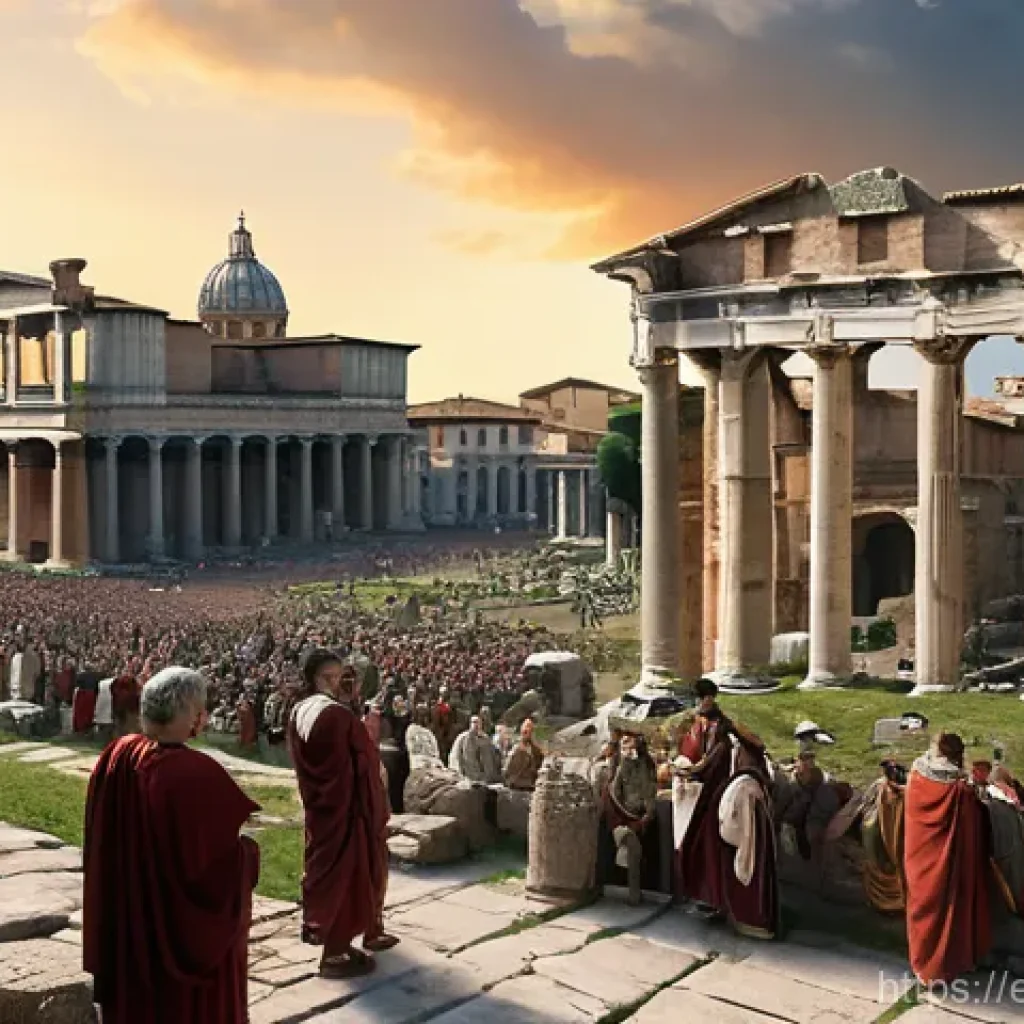
Hey there, history buffs and curious minds! I’ve always been captivated by ancient Rome, and honestly, who isn’t? But have you ever paused to truly think about the monumental shift that occurred when it transitioned from a republic, where citizens had a voice, to a vast, centralized empire ruled by a powerful emperor?
It’s more than just a change in leadership; it’s a complete reshaping of governance, society, and the very ideals that defined one of the most influential civilizations in history.
I mean, personally, seeing how dramatically their entire system evolved really puts into perspective the resilience and adaptability of human political structures, lessons that frankly still resonate in our world today.
This isn’t just dusty old history; it’s a gripping tale of power, people, and profound transformation that continues to spark debate and inspire awe. So, if you’re ready to unravel the intricate layers of this incredible evolution, let’s dive into the fascinating differences between the Roman Republic and its mighty Empire right now!
The Shifting Sands of Power: From Citizen’s Voice to Imperial Decree
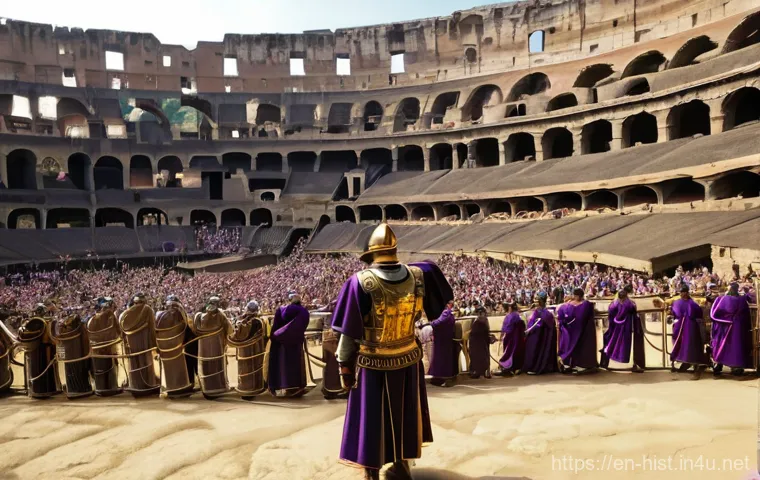
It’s truly incredible to think about how radically Rome’s governance transformed over centuries. When you look at the Republic, you see a system, albeit often messy and volatile, where citizens genuinely had a say.
I mean, they had various assemblies where ordinary Romans could vote on laws, elect magistrates, and declare war. It wasn’t perfect, absolutely, and the wealthy certainly held more sway, but the *idea* of civic participation was central.
You really felt like you were part of something bigger, contributing to the destiny of Rome itself. The Senate, while an advisory body, held immense moral authority and guided policy, acting as a check on ambitious individuals.
It was a complex dance of power, often exhilarating and sometimes disastrous, but undeniably rooted in a form of collective decision-making. I remember diving into ancient texts and just feeling the weight of those debates, the passion of orators like Cicero trying to steer the ship of state.
It was a system built on the premise that no single person should ever wield absolute power, a direct response to their earlier experiences with kings.
That ideal, for a time, truly shaped everything.
The Assemblies and the Senate: Echoes of a Republic
During the Republic, the Roman political landscape was a bustling marketplace of ideas and aspirations, at least for its free male citizens. You had the Comitia Centuriata, which elected consuls and praetors, and voted on laws, often heavily influenced by wealth.
Then there was the Comitia Tributa, organized by tribes, which elected lower magistrates and passed laws relevant to the common people. And let’s not forget the Concilium Plebis, the plebeian assembly, which was incredibly powerful, especially after the Struggle of the Orders.
These bodies, along with the Senate, formed a complicated, often contentious, but fundamentally participatory government. The Senate, while not possessing direct legislative power in the same way modern parliaments do, was the ultimate guardian of Roman tradition, guiding magistrates and debating foreign policy.
They were the seasoned voices, the wise elders, and their resolutions, known as *senatus consulta*, carried immense weight. Personally, I find this era so fascinating because you can see the ongoing tension between democratic ideals and oligarchic realities playing out, a dynamic that still feels surprisingly relevant when we look at contemporary political systems.
It was a constant push and pull, a living, breathing experiment in self-governance that, for a significant period, managed to keep a lid on total individual control.
The Emperor’s Word: Unilateral Authority Takes Hold
Fast forward to the Empire, and everything changes. The various assemblies that once pulsed with citizen debate withered away, becoming mere formalities or ceasing to function altogether.
The Senate still existed, sure, but its power was severely curtailed. Instead of being the ultimate policy guide, it became largely an administrative body, ratifying the emperor’s decisions and serving as a source of bureaucrats and provincial governors.
The real power, the absolute, undeniable authority, rested solely with the emperor. His word was law. I mean, think about it: one person, at the apex of an enormous military and administrative machine, making decisions that affected millions.
It’s a breathtaking consolidation of power. This wasn’t just a shift in who held the top job; it was a fundamental alteration of the very fabric of Roman society, moving from a system of checks and balances, however imperfect, to one of almost divine right.
As someone who loves history, it’s a stark reminder of how quickly political structures can change, especially when faced with internal strife and the promise of stability.
The transition wasn’t instantaneous or universally welcomed, but once the precedent was set, the path towards centralized, imperial authority became almost irreversible, and honestly, quite terrifying in its scope.
A Tale of Two Armies: Loyalty and Legions Reimagined
The evolution of the Roman military, from the Republic’s citizen-soldiers to the Empire’s professional legions, is a compelling narrative that really highlights the broader societal shift.
In the early Republic, military service wasn’t just a duty; it was a fundamental aspect of Roman citizenship. You were expected to answer the call, to defend your homeland, your family, and your ideals.
These were farmers, shopkeepers, and artisans, temporarily leaving their livelihoods to fight for Rome. Their loyalty was, at least in theory, to the Republic itself, to the Senate and People of Rome – *Senatus Populusque Romanus* (SPQR).
This attachment to the state, rather than a single general, was a powerful force that held the Republic together even through its most trying wars. There was a direct link between owning land, paying taxes, and serving in the legions.
Personally, I find this concept incredibly inspiring, this idea of a citizen militia directly invested in the survival and prosperity of their collective.
It speaks to a deep sense of shared responsibility that defined the early Roman identity.
Citizen Soldiers: Defending the Republic’s Ideals
The Republican army, particularly in its earlier phases, was largely a conscript force. Citizens were called upon to serve, and their commitment was often driven by a sense of civic duty and the protection of their property and way of life.
When you look at figures like Cincinnatus, who left his plow to lead Rome and then returned to his farm, you see the embodiment of these republican virtues.
Soldiers fought for their families, their land, and the collective ideals of their nascent state. Their commanders, while respected, were ultimately subservient to the Senate and the Roman people.
This structure fostered a strong sense of cohesion and a belief in the cause, as every soldier had a personal stake in Rome’s success. It was a powerful model, one that enabled Rome to expand its influence across Italy and beyond, relying on a constantly replenished pool of citizens ready to defend what they believed in.
I often wonder what it must have felt like, standing shoulder to shoulder with your neighbors, knowing you were all fighting for the same vision of Rome.
Imperial Legions: Swearing Allegiance to One Man
The late Republic saw a gradual but profound transformation, largely driven by ambitious generals like Marius, Sulla, and ultimately Caesar. They began to recruit landless citizens, offering them pay, spoils, and, crucially, promises of land upon retirement.
This professionalization of the army fundamentally shifted loyalties. Soldiers became less attached to the abstract concept of the Republic and more devoted to the general who provided for them.
This personal allegiance proved incredibly dangerous, enabling generals to use their legions as personal instruments of power. By the time the Empire was established, the army was completely professional and swore an oath of loyalty directly to the emperor.
They were his legions, his instruments for maintaining order and expanding the empire. This meant that the emperor’s personal security and political stability often rested on the unwavering loyalty of his troops.
While this brought a degree of stability after the civil wars, it also meant that a discontented army could easily overthrow an emperor, leading to periods of extreme instability.
It’s a chilling reminder of how personal ambition can fundamentally alter the foundational structures of a state, turning protectors into kingmakers.
Economic Engines: Prosperity and Peril in a Changing World
The economic landscape of Rome underwent a massive transformation, mirroring the political changes from Republic to Empire. In the Republic, especially the early and middle periods, the economy was largely agrarian, driven by small landholders, and characterized by a relatively decentralized approach.
Commerce and trade certainly flourished, particularly around the Mediterranean, but the sheer scale of centralized planning and resource management seen in the Empire was simply not there.
Citizens were involved in trade, craft, and farming, and while there were certainly wealthy elites, the concentration of economic power eventually became much more pronounced under imperial rule.
I’ve always found it fascinating how economic shifts can parallel political ones, almost like two sides of the same coin. The growth of Rome’s territory under the Republic, even then, started to strain its internal economic systems, laying some groundwork for the changes to come.
Republican Commerce: Free Markets, Fierce Competition
The Republican economy, while expanding dramatically with conquest, retained a certain individualistic dynamism. Farmers, merchants, and artisans operated with a degree of independence, contributing to a vibrant, albeit often competitive, marketplace.
Trade routes stretched across the Mediterranean, and Roman goods, along with those from conquered territories, flowed into the city. However, the system also faced immense challenges.
The influx of cheap slave labor from conquests often undercut small farmers, leading to widespread poverty and social unrest, particularly in the later Republic.
This economic stratification was a major factor in the Republic’s downfall, creating a volatile social environment ripe for demagoguery and civil war.
It was a period of incredible growth and innovation, but also one where the cracks in the economic foundation began to show, highlighting the difficulties of managing prosperity without widespread equity.
Imperial Riches: Centralized Wealth and State Control
Under the Empire, the economy became a much more centralized and state-controlled apparatus, primarily aimed at supporting the vast imperial bureaucracy, the army, and, of course, the emperor’s opulent lifestyle.
While private enterprise still existed, the sheer scale of public works, grain distribution (the *annona*), and monumental building projects meant that the state played a dominant role in resource allocation.
Taxes flowed from the provinces to Rome, fueling both its prosperity and its immense military machine. This centralization allowed for impressive feats of engineering and long periods of peace (the Pax Romana), which in turn fostered stable trade routes and economic growth across the empire.
However, it also meant that economic downturns could have far-reaching consequences, as the interconnected system was more vulnerable to disruptions like plagues or barbarian incursions.
Personally, the efficiency of Roman imperial infrastructure, from roads to aqueducts, has always impressed me, showcasing the power of centralized economic planning, even as it sometimes stifled individual economic liberty.
Justice and Law: A New Era of Authority
The very bedrock of Roman society was its law, and the transition from Republic to Empire profoundly reshaped its application and philosophy. In the Republic, the law was, at least in principle, a safeguard for citizens, reflecting a sense of collective rights and procedures.
While not always perfectly applied, especially to non-citizens or the poor, the idea of *lex*, or formal law, passed by the assemblies and interpreted by magistrates, was paramount.
There was a strong emphasis on legal precedent, public trials, and a system designed to afford citizens some degree of protection against arbitrary power.
It wasn’t perfect, absolutely not, but the framework was there to provide a sense of justice for the Roman people. I remember reading about famous legal cases from the Republican era and being struck by how much emphasis was placed on legal arguments and rhetorical skill, almost like a grand public performance where the fate of individuals hung in the balance.
Republican Justice: The Rule of Law, for Citizens
During the Republic, the legal system was characterized by a strong emphasis on public trials and the role of various magistrates, like praetors, who interpreted and administered the law.
Citizens had the right to appeal judgments to the people’s assemblies, a crucial check on judicial power. The development of Roman civil law (*ius civile*) was a testament to the Republic’s commitment to codifying rights and procedures, providing a framework for everything from property disputes to criminal accusations.
While only citizens fully benefited from these protections, and corruption was certainly an issue, the ideal was one of a predictable and publicly accessible legal system.
Jurors were often drawn from the citizenry, further reinforcing the idea of community involvement in the administration of justice. It was a system that, for all its flaws, reflected a society that valued legal process and the rights of its free people.
Imperial Law: Administering a Vast Domain
With the advent of the Empire, the legal system evolved to meet the demands of a vast, centralized state. While much of the existing Roman law continued to be applied, the ultimate source of legal authority shifted to the emperor.
Imperial edicts and decrees became a primary source of law, often overriding traditional legal precedents or senatorial resolutions. The emperor also established a more professional and centralized judiciary, with appointed judges and a clear hierarchy of courts.
This allowed for more efficient administration of justice across the sprawling empire, ensuring uniformity and reducing local variations. However, it also meant that the emperor could exert direct influence over legal outcomes, and the concept of appeal shifted from the assemblies to the emperor himself.
This centralization brought order but arguably at the cost of some of the public participation and safeguards that characterized the Republican system.
It was a massive bureaucracy aimed at governing diverse populations, a monumental task that required a robust, yet ultimately top-down, legal structure.
Cultural Currents: Identity and Imperial Grandeur
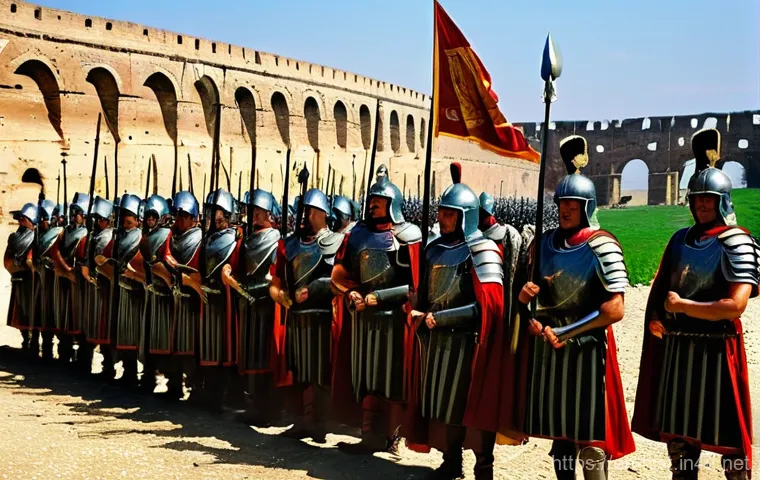
The very soul of Rome, its cultural identity, also underwent a profound metamorphosis from the Republic to the Empire. In the Republic, there was a strong emphasis on certain virtues – *virtus* (manly excellence), *pietas* (duty to gods, family, and state), *gravitas* (dignity), and *frugalitas* (frugality).
These weren’t just abstract ideas; they were actively encouraged and celebrated as cornerstones of Roman character. The art and literature of the Republic often reflected a more austere, utilitarian aesthetic, focused on historical narratives and civic duty.
It was about building a strong, moral citizenry. When I think about it, there’s a certain rugged charm to the Republican ethos, a sense of no-nonsense dedication to the common good, even if that common good often meant expanding Roman power.
Republican Virtues: Simplicity and Civic Duty
Life in the Republic, particularly in its earlier stages, stressed a degree of simplicity and a deep commitment to civic life. Public service was highly valued, and personal ambition was ideally tempered by a dedication to the *res publica*.
Farmers were idealized as the backbone of Roman society, embodying the virtues of hard work and self-sufficiency. Art often served didactic purposes, commemorating military victories or moral exemplars.
Even public architecture, while impressive, generally emphasized functionality and Roman strength rather than sheer opulence. The Roman toga, for instance, a simple but dignified garment, symbolized this civic identity.
It was a culture that, on the surface, prided itself on its moral fortitude and its resistance to the perceived decadence of Eastern monarchies.
Imperial Splendor: Spectacle, Art, and Romanitas
With the Empire came an explosion of grandeur and monumentalism, a deliberate effort to project the power and majesty of the emperor and the state. Art became more elaborate, often glorifying the emperor and his achievements.
Colossal statues, grand arches, and magnificent public buildings like the Colosseum and Trajan’s Forum were erected not just for utility, but to inspire awe and reinforce the notion of Roman imperial supremacy.
The concept of *Romanitas*, a shared Roman identity, was fostered across the vast empire through standardized administration, coinage, and cultural symbols.
Public spectacles, like gladiatorial games and chariot races, became massive affairs, serving as a distraction for the populace and a means for emperors to display their generosity.
The emphasis shifted from austere civic virtue to a celebration of imperial power and wealth, a truly dazzling display that still captivates us today.
This shift was a deliberate strategy to solidify imperial rule, offering “bread and circuses” in exchange for political submission, and honestly, it worked pretty well for a long time.
The Daily Grind: Life Under Republic vs. Empire
It’s fascinating to consider how these monumental political shifts actually trickled down and impacted the daily lives of ordinary Romans. Imagine waking up in the Republic versus the Empire; while many fundamental aspects of life like family, farming, and commerce remained, the overarching social and psychological fabric was distinct.
Under the Republic, there was a constant hum of political activity, with citizens frequently gathering in assemblies or engaging in public discourse. You felt a direct connection to the state, even if your personal influence was minimal.
Fast forward to the Empire, and that direct involvement largely evaporated for the average person. The emperor’s decrees were law, and while there was greater stability, there was also a pervasive sense of detachment from the centers of power.
It’s a trade-off, isn’t it? Stability for a degree of political agency.
The Common Citizen: Participation vs. Spectacle
In the Republic, for free male citizens, there was a degree of political participation that permeated daily life. They could attend assemblies, vote on laws, and elect officials.
This gave many a sense of ownership and involvement in the fate of their city. Public debate was a lively affair, and even the non-elite could feel the reverberations of political struggles.
Under the Empire, however, this participation largely disappeared. The focus shifted from active civic duty to being a subject of an emperor. To keep the populace content and prevent unrest, emperors provided lavish public spectacles – gladiatorial games, chariot races, and free grain.
These “bread and circuses” became a primary way for the common citizen to engage with the state, turning them from active participants into spectators.
It was a clever, if cynical, way to manage the masses, ensuring their loyalty through entertainment and basic provisions rather than direct political engagement.
Social Mobility: Opportunities and Obstacles
Social mobility in both eras had its complexities. In the Republic, while a strict class system existed, there were pathways for advancement, particularly through military service or accumulating wealth, which could elevate one’s status.
New families, known as *novi homines*, could occasionally break into the senatorial aristocracy, though it was a monumental struggle. The Empire brought a more rigid bureaucratic structure, which, paradoxically, could offer new forms of social mobility through imperial service.
Talented individuals, even those of humble birth, could rise through the ranks of the army or the imperial administration, gaining wealth and influence.
However, the top echelons of society, the senatorial and equestrian orders, remained largely closed to outsiders. While the Empire offered stability and opportunities in its vast administration, it also solidified a hierarchical structure, making it harder to challenge the established order from below.
| Feature | Roman Republic | Roman Empire |
|---|---|---|
| Head of State | Elected Consuls (two, serving one-year terms) | Emperor (hereditary or through military succession, lifelong tenure) |
| Legislature | Senate, various popular assemblies (Comitia Centuriata, Comitia Tributa, Concilium Plebis) | Senate (largely advisory), Imperial Edicts |
| Military Loyalty | To the Roman State (SPQR) | To the Emperor personally |
| Citizens’ Political Role | Active participation in assemblies, voting, holding magistracies | Largely passive; focused on public spectacles and imperial patronage |
| Territorial Governance | Provinces administered by proconsuls/propraetors from Rome | Centralized administration with imperial governors and extensive bureaucracy |
Why Did It Happen? The Inevitable March of Change
Looking back, the transition from Republic to Empire feels almost inevitable, doesn’t it? It wasn’t a sudden, jarring event but rather a gradual erosion of republican institutions and ideals, driven by a complex interplay of internal strife, military ambition, and demographic shifts.
The sheer success of the Republic in expanding its territory ultimately became its undoing. Governing such a vast domain with a city-state’s political framework proved unsustainable.
The wealth generated by conquest, while immense, also created massive social inequalities, fueling resentment among the poor and igniting civil wars that tore the fabric of society apart.
As a history enthusiast, I often ponder whether there was a point of no return, a decision or a series of events that sealed the Republic’s fate. It seems to me that once powerful generals started using their legions as personal armies, the foundation of citizen-led government began to crumble under the weight of individual ambition.
Internal Strife: The Seeds of Imperialism
The late Republic was a period of intense political instability and bloody civil wars. Figures like the Gracchi brothers attempted reforms but were met with violence, setting a dangerous precedent.
The rise of powerful, charismatic generals who commanded immense personal loyalty from their troops, such as Marius, Sulla, Pompey, and Caesar, fundamentally challenged the authority of the Senate and the assemblies.
These strongmen, often driven by personal ambition and a desire for glory, repeatedly bypassed traditional republican norms, using military force to achieve political ends.
The constant infighting and power struggles created a desperate yearning for peace and order among the Roman populace. People were tired of the instability, the bloodshed, and the endless cycles of proscriptions and revenge.
This weariness created fertile ground for someone to step in and promise an end to the chaos, even if it meant sacrificing traditional liberties.
The Allure of Stability: Trading Freedom for Order
Ultimately, the Roman people, exhausted by decades of civil war, were willing to trade many of their republican freedoms for the promise of peace and stability.
Augustus, Caesar’s adopted son, brilliantly understood this sentiment. He carefully consolidated power, presenting himself not as a dictator but as the “First Citizen” (*princeps*), restoring order and bringing an end to the seemingly endless conflicts.
The *Pax Romana*, the Roman Peace, which began under Augustus, brought unprecedented stability and prosperity to the empire for centuries. This era of peace, economic growth, and efficient administration, while overseen by an emperor with absolute power, was a welcome relief after the turmoil of the late Republic.
It was a Faustian bargain in some ways, sacrificing the messy, often volatile, freedom of the Republic for the ordered, centralized authority of an emperor.
And for many Romans, after enduring so much chaos, it was a trade-off they were more than willing to make.
Wrapping Things Up
As we’ve journeyed through the incredible transformation of Rome, from a vibrant, if sometimes chaotic, Republic to a powerful, centralized Empire, it’s clear that history isn’t just a series of dates and names. It’s a living testament to human ambition, the constant search for stability, and the often-unforeseen consequences of collective decisions. What truly strikes me is how these shifts weren’t just about political structures; they fundamentally reshaped everything from military loyalty to daily life, from economic engines to the very soul of Roman culture. It makes you wonder about our own times, doesn’t it? How the desire for order can sometimes lead to a relinquishing of freedoms, or how individual ambitions can redraw the maps of power. Understanding Rome’s story isn’t just about the past; it’s a powerful mirror reflecting the timeless dilemmas of governance, society, and the human spirit. I hope this deep dive has given you as much to ponder as it has me!
Handy Roman Insights to Keep in Mind
Here are a few nuggets of information and perspectives that I’ve found incredibly helpful when thinking about the Roman world. These often get overlooked but really highlight the nuances of this incredible civilization:
1. The Roman Republic wasn’t a democracy in the modern sense; it was an oligarchy with strong democratic elements, where a few elite families often held immense power despite citizen assemblies. The struggle between the patricians and plebeians was a constant feature, shaping much of its early legal and political development, reminding us that power dynamics are rarely simple or purely democratic.
2. The Pax Romana, or Roman Peace, was a period of unprecedented stability and prosperity that lasted for over 200 years, beginning with Emperor Augustus. While it ushered in an era of cultural flourishing and economic growth, it was ultimately maintained by the absolute authority of the emperor and the strength of the legions, a fascinating trade-off of liberty for order.
3. Roman law, despite its evolution, formed the basis of many modern legal systems in the Western world. Concepts like innocent until proven guilty, property rights, and various contractual agreements find their roots in Roman jurisprudence, showcasing the enduring legacy of their structured approach to justice.
4. The Roman military’s professionalization under figures like Marius fundamentally changed its nature, moving from a citizen militia to a career army. This shift had profound implications for political power, as legions became loyal to their generals rather than the state, a key factor in the Republic’s demise and the rise of emperors.
5. While we often focus on Rome, it’s crucial to remember the vastness of the Empire meant incredible diversity. Conquered peoples often retained their local customs, languages, and religions, becoming “Roman” through administration, law, and shared infrastructure rather than a complete cultural assimilation. This complex tapestry of cultures under one imperial umbrella is truly a marvel.
Key Takeaways from Our Roman Journey
If there’s one thing to really grasp from Rome’s epic journey from Republic to Empire, it’s that political change is rarely a simple switch, but a complex, often turbulent evolution driven by a confluence of factors. We saw how the desire for expansion and military success, while initially strengthening the Republic, eventually created internal pressures that it couldn’t sustain. The shift wasn’t just about a new leader; it was a fundamental redefinition of what it meant to be Roman – impacting everything from who held power to how daily life was lived, and even the very spirit of its culture. Ultimately, the stability offered by imperial rule, however autocratic, proved to be an irresistible balm after decades of civil strife, a powerful lesson in how societies can sometimes choose order over freedom when pushed to their limits. It truly underscores the fragility of even the most robust institutions when faced with unchecked ambition and societal unrest.
Frequently Asked Questions (FAQ) 📖
Q: Why did the Roman Republic, with all its checks and balances, ultimately crumble and give way to an Empire? It just seems like such a dramatic reversal!
A: Oh, this is such a fantastic question, and one I’ve spent countless hours pondering myself! You know, it’s rarely one single thing that causes such a monumental shift, right?
For the Roman Republic, it was a slow burn, a gradual accumulation of pressures that eventually pushed it past its breaking point. From what I’ve gathered and deeply considered, a huge part of it was simply that the Republic’s system, designed for a small city-state, couldn’t effectively govern an ever-expanding empire.
Think about it: as Rome conquered more territory, wealth poured in, but so did immense social and economic inequality. The rich got richer, snapping up huge tracts of land, while ordinary farmers, off fighting Rome’s wars, lost their homes and livelihoods, flocking to Rome’s overcrowded streets.
This created a powder keg of discontent. Then came the ambitious generals – figures like Marius, Sulla, Pompey, and of course, Caesar – who started building loyal armies not to the Republic, but to themselves.
When soldiers owed their allegiance to their commander rather than the state, civil wars became an inevitable outcome. After decades of brutal internal conflicts, people were just exhausted.
They craved stability, peace, and order more than they clung to the abstract ideals of republican liberty. It was almost like a collective sigh of relief when Augustus (Octavian) finally brought an end to the chaos, even if it meant consolidating power into one person’s hands.
It wasn’t that the Republic failed overnight; it was slowly eroded by its own success and the human ambition it couldn’t contain.
Q: So, what was the biggest practical difference for an average Roman citizen living under the Republic versus living under the Empire? Did their daily lives really change that much?
A: That’s a super insightful question because it gets right down to the nitty-gritty of how these massive political changes impacted real people! While the headlines were all about emperors and senates, for the average Joe or Jane in Rome, or even more so in the far-flung provinces, the change was both subtle and profound.
In the Republic, especially if you were a male citizen living in Rome, you theoretically had more direct political participation – you could vote, attend assemblies, and even run for office if you had the means.
There was a sense of collective ownership, even if it was often dominated by the aristocracy. But let’s be real, for many, this “freedom” often felt like endless political squabbling, corruption, and the constant threat of civil war!
Once the Empire was established, the most immediate and tangible change was stability. Imagine the relief after generations of civil strife! The Pax Romana, the Roman Peace, brought unprecedented security.
While direct political power for ordinary citizens diminished significantly – decisions now flowed from the Emperor down – life often became more orderly.
Infrastructure projects like roads and aqueducts flourished, justice became more standardized across the vast empire, and trade boomed. You might not be casting a vote for a consul, but your local market might be safer, your taxes perhaps more predictable, and the roads smoother for travel.
So, while you sacrificed some political voice, you gained a huge measure of peace and a generally more stable, prosperous environment, which, let’s be honest, many people probably preferred for their day-to-day existence!
Q: Wasn’t the Roman Empire essentially a dictatorship? How did Romans reconcile this with their long history of republican ideals and civic virtue?
A: This is a truly thought-provoking point, and it touches on one of the most fascinating psychological aspects of the transition! On the surface, yes, an Emperor holding supreme power certainly looks like a dictatorship.
However, I’ve found that the Romans, especially in the early Imperial period, were incredibly clever about how they presented this new reality. Augustus, the first Emperor, was a master of political spin.
He didn’t declare himself king or dictator; instead, he carefully crafted the image of the “princeps,” or “first citizen.” He maintained the illusion that the Senate and traditional republican offices still functioned, even though their real power was significantly curtailed.
For example, consuls were still elected, but they largely served at the Emperor’s pleasure. It was a brilliant sleight of hand to preserve the appearance of republicanism while consolidating actual power.
Many Romans, frankly, were likely willing to overlook the technical loss of republican ideals because the alternative they had just experienced was so much worse – decades of brutal civil wars, assassinations, and instability.
The idea of res publica (public affair) and civic virtue shifted. Instead of actively participating in governance, civic virtue under the Empire often meant loyalty to the Emperor, upholding Roman law, and contributing to the Empire’s overall stability and prosperity.
It was a trade-off: less direct freedom in political decision-making in exchange for peace, order, and a sense of belonging to a vast, powerful, and (mostly) stable empire.
It shows just how adaptable people can be when faced with a stark choice between chaos and controlled order!