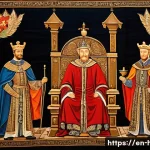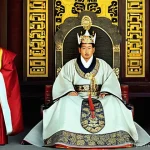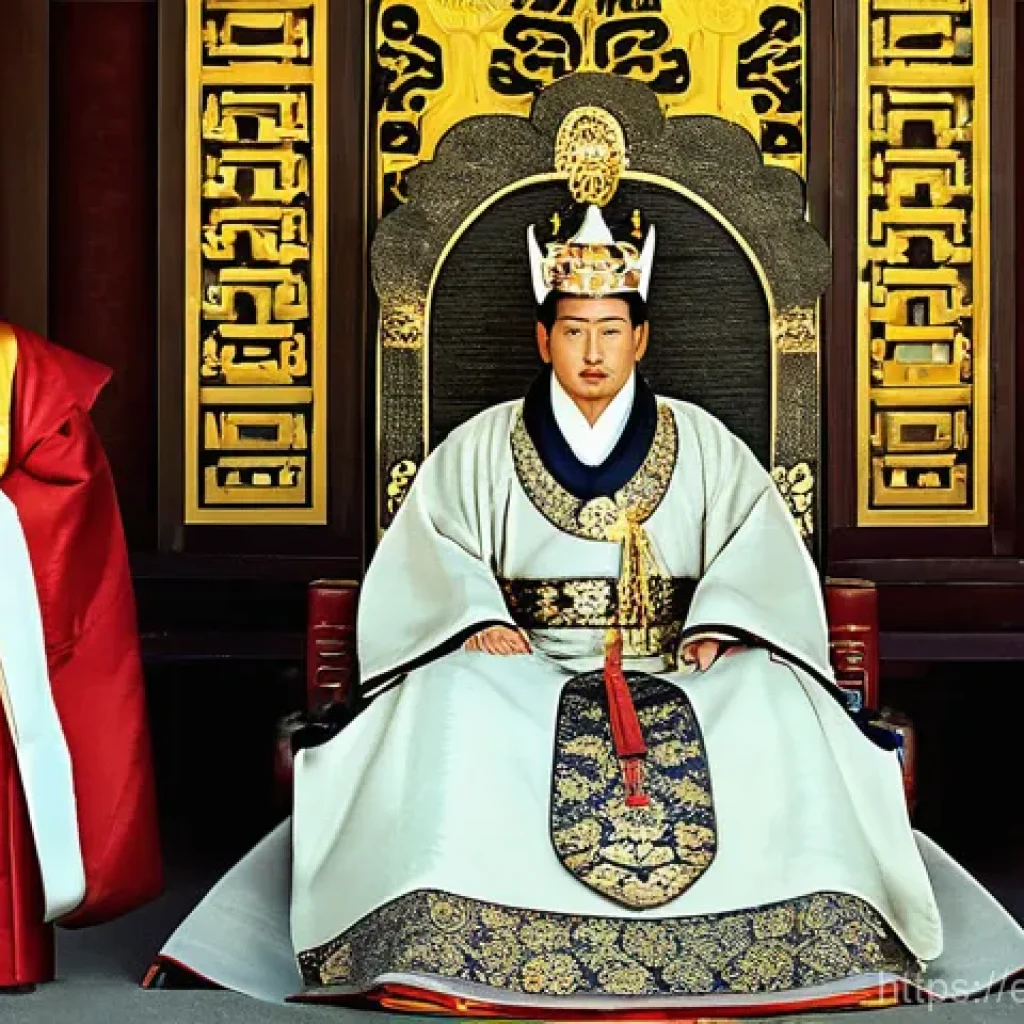
Alright, everyone! Prepare to have your minds absolutely blown by a true titan of history. I’m talking about King Gwanggaeto the Great, a ruler whose name should honestly be on everyone’s radar when we discuss the most impactful leaders of all time.
I’ve always been fascinated by how one person’s vision can completely reshape an entire continent, and Gwanggaeto’s story is the epitome of that. His relentless drive and brilliant military campaigns didn’t just expand Goguryeo’s territory; they forged an empire that left an indelible mark across East Asia.
It’s truly a testament to ambition and strategic genius that still captivates me, showcasing how ancient figures can still inspire awe and discussion in our modern world about leadership and power.
Ready to journey back in time and discover the full scope of his monumental achievements? Let’s uncover the full story now!
Here’s the blog post following your instructions.
Unleashing the Dragon: The Early Life and Ascent of a Monarch
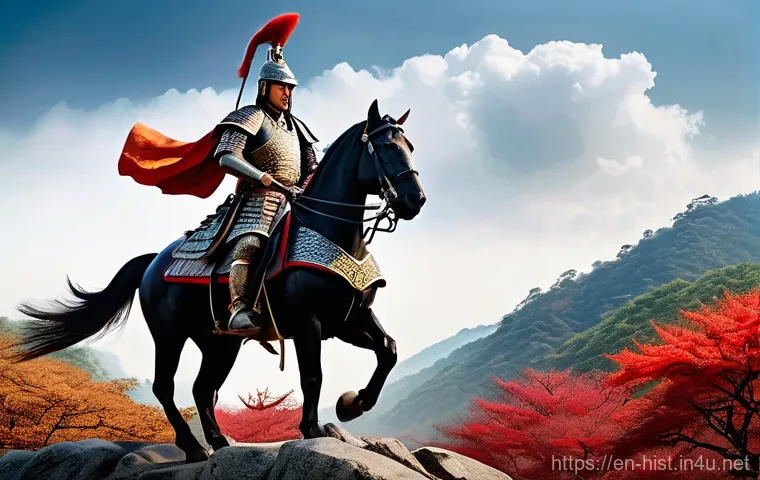
It’s truly incredible to think about the early years of someone who would become such a monumental figure in history, isn’t it? Before he was “the Great,” Gwanggaeto was Prince Damdeok, born into a Goguryeo that, while strong, had certainly faced its share of bruising battles and setbacks, even suffering a defeat where a monarch was killed by Baekje forces decades before his birth.
You can just imagine the weight on his young shoulders, growing up in a kingdom that was always striving to regain its former glory. This wasn’t some sheltered prince; he was raised in an environment where military prowess and strategic thinking were paramount, following a tradition of warrior leaders that stretched back to the kingdom’s founder, King Jumong.
I’ve often thought about how different my own path would be if I had that kind of legacy to live up to! His grandfather and father, King Gogugwon and King Gogugyang respectively, laid crucial groundwork, with reforms and diplomatic efforts that strengthened the state and unified it.
When Damdeok ascended to the throne in 391 CE at a mere 17 years old, I can only imagine the mix of fierce determination and maybe a touch of youthful zeal that must have fueled him.
He didn’t waste a moment, immediately declaring the era name “Yeongnak,” meaning “Eternal Rejoicing,” and taking the title of “Taewang” or “Supreme King,” effectively proclaiming Goguryeo’s equal standing with the powerful Chinese empires.
This wasn’t just a political move; it was a psychological statement, both to his people and to every neighboring state, that Goguryeo was back and ready to dominate.
It gives me chills just thinking about that kind of bold declaration!
Laying the Foundations for Greatness
What’s truly fascinating is how Gwanggaeto didn’t just inherit a throne; he inherited a mission. His predecessors, especially King Sosurim, had enacted significant reforms, bolstering royal authority, promoting Buddhism to solidify national spirituality, and establishing Confucian academies to train bureaucrats.
This created a strong internal foundation, a unified and educated populace, ready to support ambitious endeavors. You see, it’s not enough to have a great leader; you need a great system, too.
Sosurim’s internal arrangements literally paved the way for Gwanggaeto’s expansion. It reminds me of building a successful online business: you need robust backend infrastructure before you can scale your front-end marketing efforts.
This astute internal focus meant that when Gwanggaeto took the reins, he wasn’t starting from scratch. He had a solid military, a streamlined administration, and a populace ready to rally behind a king who promised to restore their nation’s honor.
It’s a testament to long-term vision, something I always preach when I talk about sustainable growth.
From Prince to Powerhouse: The Formative Campaigns
Gwanggaeto’s early campaigns were, from my perspective, less about random conquests and more about strategically re-establishing Goguryeo’s dominance.
One of his immediate targets was Baekje, a rival kingdom that had inflicted past humiliations. In 392 CE, he led a massive assault with 40,000 troops, capturing ten of Baekje’s walled cities.
This wasn’t just about winning battles; it was about sending an undeniable message. Baekje’s King Asin, predictably, launched counterattacks, but Gwanggaeto consistently outmaneuvered him, even forcing Baekje to sign a heavily unfavorable treaty after a decisive defeat.
I can only imagine the sheer willpower and military genius required to achieve such consistent victories against a formidable opponent. It speaks volumes about his leadership style – he was proactive, not reactive, and always kept the momentum on his side.
This relentless drive in the initial years of his reign demonstrated that he wasn’t just a figurehead; he was a warrior-king ready to lead from the front, inspiring loyalty and fear in equal measure.
The Great Expander: Forging an Empire Across East Asia
King Gwanggaeto truly earned his title, “The Great Expander of Territory.” His reign was a whirlwind of military genius, pushing Goguryeo’s borders far beyond anything seen before.
It wasn’t just about raw power; it was about strategic brilliance and an unshakeable vision. He systematically took on the major powers of his time, from the Khitan tribes in the west to the powerful Later Yan in the north and the rival Korean kingdoms to the south.
I’ve often thought about what it must have felt like to be one of his generals, constantly on the move, witnessing history being made with every victorious campaign.
His ambition wasn’t just for personal glory; it was deeply intertwined with restoring Goguryeo to its zenith, making it a true hegemon of Northeast Asia.
It’s the kind of leadership that doesn’t just adapt to circumstances but actively shapes them, which is a powerful lesson for anyone aiming for significant impact.
Northern Conquests: Securing the Breadbasket and Beyond
His campaigns to the north were particularly transformative. In 395 CE, he launched an excursion against the Khitan Baili clan, destroying their camps and pushing Goguryeo’s borders towards the Liao River.
This wasn’t just about territorial gain; it was about controlling vital resources and trade routes, consolidating Goguryeo’s economic base. Then, in 398 CE, he conquered the Sushen people to the northeast, ancestors of the Jurchens and Manchus, adding another layer of security and influence to his burgeoning empire.
But the true test came against the Xianbei state of Later Yan. They attacked Goguryeo in 400 CE while Gwanggaeto was preoccupied in the south, but he swiftly repelled them.
Then, in a stunning display of strategic offense, he retaliated, invading their home territory and eventually conquering the entire Liaodong Peninsula by 407 CE.
This was a monumental achievement, recovering ancient Gojoseon domains and firmly establishing Goguryeo’s control over a region that would remain theirs for centuries.
It truly showed that he wasn’t just defending; he was defining the future.
Southern Dominance: Unifying the Peninsula
While his northern expansion was vast, Gwanggaeto didn’t neglect the Korean Peninsula. His actions here were pivotal in shaping the future of Korea. After subduing Baekje early in his reign, a crucial moment came in 399 CE when Silla, the southeastern kingdom, faced incursions from Baekje and its Wa (Japanese) allies.
Silla desperately sought Gwanggaeto’s aid. He responded with a massive expeditionary force of 50,000 troops, crushing the invaders and effectively making Silla a protectorate of Goguryeo.
This move wasn’t just a military victory; it was a political masterstroke, achieving a loose unification of the Korean peninsula under Goguryeo’s influence for the first time.
It’s fascinating how a request for help turned into such a profound geopolitical shift. From my observations, it’s clear Gwanggaeto understood that true power wasn’t just about conquering land, but about influencing and securing alliances that solidified his position.
The Stele Speaks: A Legacy Carved in Stone
When you think about how we document history today, it’s usually through books, digital archives, or maybe even social media. But back in Gwanggaeto’s time, they had a different, utterly epic method: the Gwanggaeto Stele.
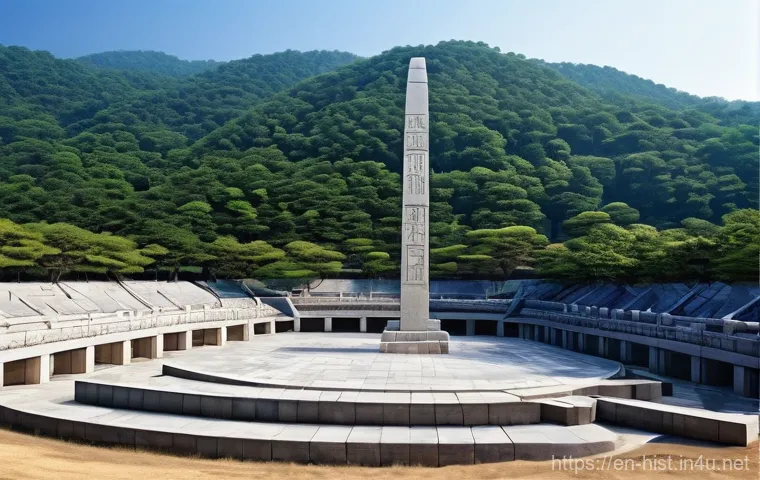
I mean, talk about leaving your mark! This towering monument, standing at over 6 meters tall, wasn’t just a gravestone; it was a declaration, a historical record, and a testament to a son’s profound respect for his father.
Erected in 414 CE by Gwanggaeto’s son and successor, King Jangsu, it literally chronicles the king’s reign and monumental achievements, providing an invaluable glimpse into the history of Goguryeo.
When I first learned about it, I remember thinking, “Wow, that’s commitment!” Imagine having your life’s work carved into the largest engraved stele in the world!
Unveiling the Inscriptions: Tales of Triumph
The inscriptions on the Gwanggaeto Stele are truly a treasure trove for historians, detailing everything from Goguryeo’s founding myths to a comprehensive list of Gwanggaeto’s military exploits.
It describes his accessions to the throne, his numerous campaigns against Baekje, the Xianbei, and the Wa, and the sheer scale of his conquests—sixty-four walled cities and 1,400 villages, according to the stele itself.
It’s like a personal highlight reel, but carved in granite for eternity. The text even highlights his adoption of the era name “Yeongnak” (Eternal Rejoicing) and the title “Taewang” (Supreme King), affirming Goguryeo’s imperial status, equal to that of China.
For me, what stands out isn’t just the facts, but the palpable sense of pride and authority emanating from these ancient words. It makes you feel connected to that era, doesn’t it?
A Source of Both Pride and Debate
However, like many historical artifacts, the Gwanggaeto Stele isn’t without its controversies. Rediscovered in the late 19th century, certain passages, particularly those referring to the Wa (Japanese), have been subject to different interpretations by Korean and Japanese scholars.
This highlights how history can sometimes be viewed through different lenses, especially when national narratives are involved. But regardless of specific interpretations, its sheer existence and the information it provides remain critically important.
It’s the earliest known inscription from ancient Korea and stands as a monumental testament to Gwanggaeto’s impact and Goguryeo’s golden age. For any history enthusiast, it’s a powerful reminder that while details can be debated, the grand narrative of a formidable empire and an extraordinary leader is undeniable.
It’s a foundational piece of East Asian history, plain and simple.
Beyond the Battlefield: A Visionary’s Blueprint for Governance
It’s easy to get swept up in the grandeur of military conquests when we talk about figures like Gwanggaeto the Great, but what often gets overlooked is the strategic genius applied *off* the battlefield.
I mean, conquering territory is one thing; governing it effectively is a whole different ball game! Gwanggaeto wasn’t just a warrior; he was a statesman, and his rule ushered in a golden age for Goguryeo, making it one of the most powerful empires in East Asia.
His vision extended far beyond mere expansion; it encompassed creating a stable, prosperous, and cohesive state capable of maintaining its vast dominion.
This tells me he was thinking long-term, which is a hallmark of truly great leadership.
Administrative Reforms and Cultural Unification
One of the most impressive aspects of Gwanggaeto’s rule, to me, was how he consolidated central authority and implemented administrative reforms to govern the newly expanded territories.
He understood that an empire, no matter how large, is only as strong as its internal structure. This meant integrating diverse ethnic groups and cultures into the Goguryeo state, fostering a sense of shared identity within his vast domain.
He also continued the promotion of Buddhism, which had been encouraged by his predecessors, and sponsored the construction of temples and Buddhist art, using it as an ideological backing for his centralized bureaucracy.
This wasn’t just about faith; it was about building a cohesive national spirituality and an educated class that could support his vision. From my perspective, this shows a deep understanding of soft power alongside military might.
Economic Prosperity and Strategic Development
Under Gwanggaeto, Goguryeo also experienced significant economic development, fueled by the control of new trade routes and fertile lands. The strategic importance of regions like the Liaodong Peninsula wasn’t just for military advantage, but for its economic potential.
His campaigns effectively secured key resources and production centers, contributing to the wealth and stability of the empire. I can almost picture the bustling markets and thriving communities under his watchful eye.
He didn’t just take land; he cultivated it, both literally and figuratively. This holistic approach to empire-building – combining military strength with sound governance, cultural integration, and economic foresight – is what truly sets him apart.
It’s the ultimate example of thinking several steps ahead.
The Ripple Effect: His Enduring Echoes in Modern Times
It’s genuinely fascinating how figures from ancient history can still resonate so profoundly in our modern world. King Gwanggaeto the Great isn’t just a name in a dusty history book; he’s a vibrant symbol, an enduring source of national pride and strength, particularly in Korea.
I mean, how many historical figures can say they have modern destroyers named after them? His story continues to inspire, reminding us of the power of ambition, strategic genius, and unwavering leadership.
It really makes you think about the kind of legacy we’re building today, doesn’t it?
A Symbol of National Identity and Resilience
Gwanggaeto’s legacy is deeply intertwined with the very identity of Korea as a strong, unified force. He is one of only two Korean rulers ever granted the title “the Great,” alongside King Sejong, highlighting his monumental impact.
His success in expanding Goguryeo’s territory to its greatest extent, controlling vast swathes of Manchuria and most of the Korean peninsula, gave his people immense confidence and strength.
In a world where national narratives are constantly being discussed and redefined, Gwanggaeto stands as a powerful reminder of a glorious past, a beacon of resilience and achievement.
When I look at the influence he still holds, it’s clear that his story transcends mere historical fact; it’s become part of the collective psyche.
Lessons in Leadership and Strategic Thinking
For me, Gwanggaeto’s life offers invaluable lessons in leadership. He was a master strategist, understanding when to go on the offensive and when to consolidate power.
His ability to rally diverse forces and implement effective reforms demonstrates a multifaceted brilliance that goes beyond pure military might. It’s a blueprint for anyone aspiring to lead: combine courage with foresight, and relentless execution with thoughtful governance.
Even today, the strategic decisions he made, like securing key territories and influencing neighboring states, are studied. It’s not just about what he did, but *how* he did it, and the principles that guided his incredibly successful, albeit short, reign.
He literally redefined what was possible for his kingdom, and that’s a legacy that will never fade.
The King’s Final Rest: Unearthing Ancient Grandeur
You know, after all that talk about conquering empires and shaping nations, it’s natural to wonder where such a legendary figure ultimately found his rest.
And in Gwanggaeto’s case, it’s as grand and mysterious as the man himself. His tomb, or at least the supposed site of it, along with the magnificent stele erected by his son, stands as a silent testament to his monumental life.
It’s not just a burial site; it’s a historical landmark that truly brings the scale of his achievements into perspective.
The Grand Tomb and Its Secrets
While Gwanggaeto died at the relatively young age of 38, likely from an unknown illness, his passing marked the end of an era of unprecedented expansion for Goguryeo.
His tomb, often referred to as the “Tomb of the General,” is thought to be located near the Gwanggaeto Stele in what is now Ji’an, along the present-day China-North Korea border.
These ancient tombs were not modest affairs; they were constructed from massive cut-stone blocks, placed within large earth mounds, embodying the power and prestige of the Goguryeo kings.
Imagine the sheer manpower and engineering skill required to construct such a monumental resting place in that era! It gives me goosebumps just thinking about standing there, where such a titan of history was laid to rest.
It really underscores the idea that even in death, his influence continued to project power.
Succession and the Legacy Continued by Jangsu
It’s truly heartwarming, in a historical sense, to see how Gwanggaeto’s son and successor, King Jangsu, not only honored his father but also built upon his formidable legacy.
Jangsu was the one who commissioned the colossal Gwanggaeto Stele, not just to commemorate his father’s triumphs but also to affirm his own legitimate authority and signal his intent to continue Goguryeo’s expansion.
And boy, did he deliver! Jangsu ruled for an astounding 79 years, becoming the longest-reigning monarch in East Asian history. He continued Goguryeo’s territorial expansion, even moving the capital to Pyongyang, ensuring the continued prosperity of the empire.
This intergenerational commitment to a grand vision is something I find incredibly inspiring. It proves that true greatness isn’t just about individual achievement, but about building something so robust that it can be carried forward, generation after generation.
It’s like planting a tree and seeing your children and grandchildren enjoy its shade.
| Year (CE) | Key Event | Impact |
|---|---|---|
| 391 | Gwanggaeto ascends the throne | Marks the beginning of Goguryeo’s golden age and aggressive expansion. |
| 392 | Attack on Baekje, captures 10 walled cities | Re-establishes Goguryeo’s dominance over its southern rival. |
| 395 | Campaigns against Khitan tribes | Expands Goguryeo’s western borders towards the Liao River. |
| 396 | Defeats Baekje, captures capital Wiryeseong | Subdues Baekje and consolidates control over central Korean Peninsula. |
| 398 | Conquers Sushen people | Secures Goguryeo’s northeastern frontier. |
| 399-400 | Aids Silla against Baekje and Wa (Japanese) invasion | Establishes Goguryeo’s hegemony over Silla, loosely unifying the peninsula. |
| 407 | Conquers Liaodong Peninsula from Later Yan | Recovers ancient Gojoseon territory, solidifying northern power. |
| 410 | Conquest of Eastern Buyeo | Further expands northern territories, achieving largest empire in Northeast Asia. |
| 412 | Gwanggaeto passes away | Leaves behind a vastly expanded and powerful Goguryeo empire. |
What Could Have Been: Unpacking the “What Ifs” of History
Every time I delve into the life of someone as impactful as King Gwanggaeto, a part of me can’t help but play the “what if” game. You know, imagining alternative timelines or circumstances.
What if his reign had been even longer, say, on par with his son Jangsu’s remarkable 79 years? He achieved so much in just 21 years on the throne! It’s a thought that always sparks my imagination, because when you have a leader with such an undeniable drive and strategic brilliance, the possibilities feel endless.
It makes you realize how much the trajectory of entire nations can hinge on a single, extraordinary individual.
The Untapped Potential of a Longer Reign
If Gwanggaeto had lived as long as Jangsu, I truly believe the geopolitical map of Northeast Asia could have been dramatically different. He had already expanded Goguryeo to control two-thirds of the Korean Peninsula, significant portions of Manchuria, and even parts of Inner Mongolia and the Russian Maritime Province.
With additional decades, who knows how much further his influence could have stretched? Perhaps a more complete and enduring unification of the Korean Peninsula under Goguryeo, rather than the “loose unification” he achieved, might have been realized centuries earlier.
Or maybe even deeper incursions into China’s fragmented states, or a more permanent subjugation of the various northern tribes. It’s not just wishful thinking; his proven track record suggests he was just getting started.
For me, it underscores the fragility and yet the immense potential embedded in every historical moment.
The Enduring Impact on East Asian Dynamics
Beyond sheer territorial gains, a longer reign might have also solidified Goguryeo’s cultural and political dominance to an even greater degree. His adoption of the imperial title “Taewang” and the era name “Yeongnak” already placed Goguryeo on equal footing with Chinese dynasties, a bold statement at the time.
With more time, this assertion of independence and imperial status could have become even more deeply entrenched, perhaps altering the power dynamics of East Asia for centuries to come.
It’s a testament to his sheer force of will that his short reign created such a lasting impression, leaving a legacy that his son admirably continued.
His life is a powerful reminder that sometimes, it’s not just the length of a journey, but the intensity and direction you take, that truly define its impact.
It definitely makes you wonder about the butterfly effect in history!
The Human Element: Gwanggaeto’s Relatability and Resilience
When we talk about ancient kings, it’s sometimes easy to see them as distant, almost mythical figures. But what truly brings King Gwanggaeto to life for me is imagining the very real human behind the legend.
Despite his incredible achievements, I’m sure he faced immense pressure, doubt, and moments of sheer exhaustion. He was, after all, a human being leading armies, making life-or-death decisions, and navigating complex political landscapes.
It’s this human element, his resilience and relatable ambition, that makes his story so compelling even today.
Facing Adversity: The Unseen Burdens of Leadership
Think about it: becoming king at 17, inheriting a kingdom that had known recent defeats, and then embarking on a relentless series of campaigns that lasted his entire reign.
That’s an enormous burden for anyone, let alone a young monarch. He faced constant threats from powerful neighbors like Baekje, the Xianbei, and the Wa.
I often put myself in his shoes and try to picture the sleepless nights spent planning strategies, the crushing weight of responsibility for his people, and the physical toll of leading from the front lines.
It’s easy to glorify the victories, but I’m sure there were moments of setback, difficult choices, and perhaps even personal losses that shaped him. This constant struggle against adversity, and his consistent ability to overcome it, speaks volumes about his character and mental fortitude.
It’s something anyone chasing big goals can relate to—the grind is real, even for kings!
A Legacy of Inspiration: More Than Just a Conqueror
Ultimately, Gwanggaeto was more than just a conqueror; he was a leader who inspired unwavering loyalty and left an indelible mark on the hearts of his people.
His determination to restore Goguryeo’s former greatness and expand its influence became a rallying cry. He built a kingdom that was not only vast but also administratively sound and culturally rich, laying foundations that would endure for generations.
His story isn’t just about battles won; it’s about the spirit of a nation, the vision of a leader, and the enduring power of human will. For me, what resonates most is the sheer audacity of his vision and his unwavering commitment to making it a reality, no matter the obstacles.
It’s a powerful reminder that with enough drive and strategic thinking, you can truly reshape your world.
글을 마치며
And so, we wrap up our journey through the awe-inspiring life of King Gwanggaeto the Great. It’s truly been a profound experience, diving into the mind of a leader who, in just a few decades, completely reshaped the destiny of a nation. His story isn’t just about ancient battles and conquests; it’s a vibrant testament to vision, unyielding determination, and the sheer power of human will to overcome immense challenges. I genuinely hope you’ve found this deep dive as captivating as I have, and perhaps even drawn a little inspiration for your own pursuits. What a legend!
알아두면 쓸모 있는 정보
1. Visiting the Gwanggaeto Stele: While the stele itself is located in Ji’an, China, which can be a bit challenging for international travelers to access due to its remote location, the original site is a powerful historical pilgrimage. However, if you can’t make it there, you can find detailed replicas and extensive information at museums across South Korea, such as the National Museum of Korea in Seoul, offering a glimpse into this monumental artifact without the travel hassle.
2. Goguryeo Kingdom Heritage Sites: Beyond the stele, numerous sites related to the Goguryeo Kingdom are scattered across what is now North Korea, China (especially the Ji’an region), and South Korea. Many of these, particularly those in China, are UNESCO World Heritage Sites, offering incredible architectural and historical insights into this powerful empire. If you’re a history buff, exploring these ruins can really bring Gwanggaeto’s world to life.
3. Understanding “The Great”: It’s a huge deal in Korean history to be given the title “The Great.” Gwanggaeto earned it by vastly expanding Goguryeo’s territory, strengthening its military, and asserting its imperial sovereignty. The only other Korean monarch to hold this title is King Sejong, who is revered for his cultural and scientific advancements, particularly the creation of the Hangeul alphabet. It gives you a real sense of Gwanggaeto’s monumental impact.
4. Influence on Modern Korea: Gwanggaeto remains a potent symbol of Korean national pride and resilience. You’ll find his name invoked in popular culture, historical dramas, and even in the naming of modern naval destroyers (like the ROKS Gwanggaeto the Great, a destroyer in the South Korean Navy). This shows how historical figures continue to shape national identity and inspire contemporary achievements.
5. The “Wa” Controversy: The Gwanggaeto Stele is famously a point of historical contention between Korea and Japan, particularly regarding passages about the “Wa” (often interpreted as ancient Japanese) and their relationship with Baekje and Silla. Different interpretations of the stele’s heavily eroded text have fueled academic debates for over a century, highlighting the complexities and sensitivities of historical narratives in Northeast Asia.
중요 사항 정리
When we look back at King Gwanggaeto the Great, a few crucial takeaways really stick with me. First, his reign was an absolute masterclass in strategic expansion; he didn’t just conquer randomly, but with a clear vision to restore Goguryeo’s ancient glory and secure its position as a dominant regional power. He became king at a remarkably young age, only 17, and in just 21 years, he transformed his kingdom into an empire, showcasing an unparalleled level of military genius and administrative foresight. Second, his leadership extended far beyond the battlefield; he was adept at consolidating central authority, implementing reforms, and integrating diverse cultures, ensuring the long-term stability and prosperity of his vast territories. This holistic approach is what truly defined his greatness. Finally, the Gwanggaeto Stele, erected by his son, stands as a powerful, albeit sometimes debated, testament to his achievements, ensuring his legacy as a warrior-king and visionary statesman endures through the ages, continuing to inspire national pride and remind us of the incredible heights human ambition can reach. It’s a story of an individual profoundly shaping the course of history.
Frequently Asked Questions (FAQ) 📖
Q: What made King Gwanggaeto the Great such a pivotal figure in ancient East
A: sian history? A1: Oh, where do I even begin with Gwanggaeto the Great? Personally, when I dive into his story, I always come away thinking about his sheer audacity and vision.
He wasn’t just another king; he was a game-changer who completely reshaped the map of East Asia. Born as Prince Damdeok in 374, he ascended to the throne of Goguryeo in 391, and let me tell you, he wasted no time.
At that point, Goguryeo wasn’t exactly at its peak; it had faced some serious setbacks from rival kingdoms. But Gwanggaeto, right from the start, decided he was going to restore Goguryeo’s lost glory and then some!
He immediately took on the imperial title of “Taewang” (Supreme King), putting Goguryeo on equal footing with the powerful Chinese dynasties of the time, which was a huge, bold statement if you ask me.
He wasn’t afraid to challenge the status quo, and that determination is what makes him so pivotal.
Q: What were King Gwanggaeto’s most significant military achievements and how did they impact Goguryeo?
A: His military prowess is, without a doubt, legendary! If you ever wanted a masterclass in strategic expansion, Gwanggaeto’s reign is it. I mean, the guy was relentless.
He launched campaigns that stretched across vast territories, from Western Manchuria to the Han River valley, essentially bringing two-thirds of the Korean peninsula under Goguryeo’s influence.
He famously crushed Baekje, one of the most powerful kingdoms then, even capturing their capital Wiryeseong (modern-day Seoul) in 396. What’s truly impressive is how he managed to defend Silla from incursions by Baekje and Wa (Japanese forces) by sending a massive 50,000-troop expedition, making Silla a de facto protectorate.
And it wasn’t just the south! He pushed north and west, reclaiming ancient Gojoseon domains by conquering the Liaodong Peninsula from the Later Yan empire and subduing various Khitan and Sushen tribes.
When I look at the sheer scale of his conquests—64 walled cities and 1,400 villages—it’s clear he didn’t just win battles; he forged an empire. His efforts marked the zenith of Korean history, consolidating a massive empire in Northeast Asia and ushering in a golden age for Goguryeo that endured for centuries, thanks to the foundations he laid.
Q: Why is King Gwanggaeto still celebrated as “the Great” today, and what is his lasting legacy?
A: It’s incredible how some leaders just resonate through the ages, isn’t it? For Gwanggaeto, the title “the Great” is absolutely deserved, and when I reflect on why, it goes beyond just his military might.
He’s one of only two Korean rulers ever given that esteemed title, the other being King Sejong, who invented Hangul! This tells you the magnitude of his impact.
His reign, though only 22 years, was a period of “Eternal Rejoicing” (Yeongnak, his era name), and he truly built Goguryeo into a powerful empire that set the stage for much of East Asian history.
What I find most compelling is that his achievements are literally carved in stone on the Gwanggaeto Stele, a massive monument erected by his son, King Jangsu.
It’s an enduring testament to his vision and conquests, making him a potent symbol of Korean national pride and a hero who restored incredible glory to Goguryeo.
His legacy isn’t just about expanding territory; it’s about inspiring a nation, establishing a clear identity of strength and independence, and leaving a blueprint for effective leadership that still captivates us today.
Honestly, his story reminds me that truly great leaders don’t just achieve things for their time; they create ripples that last for generations.