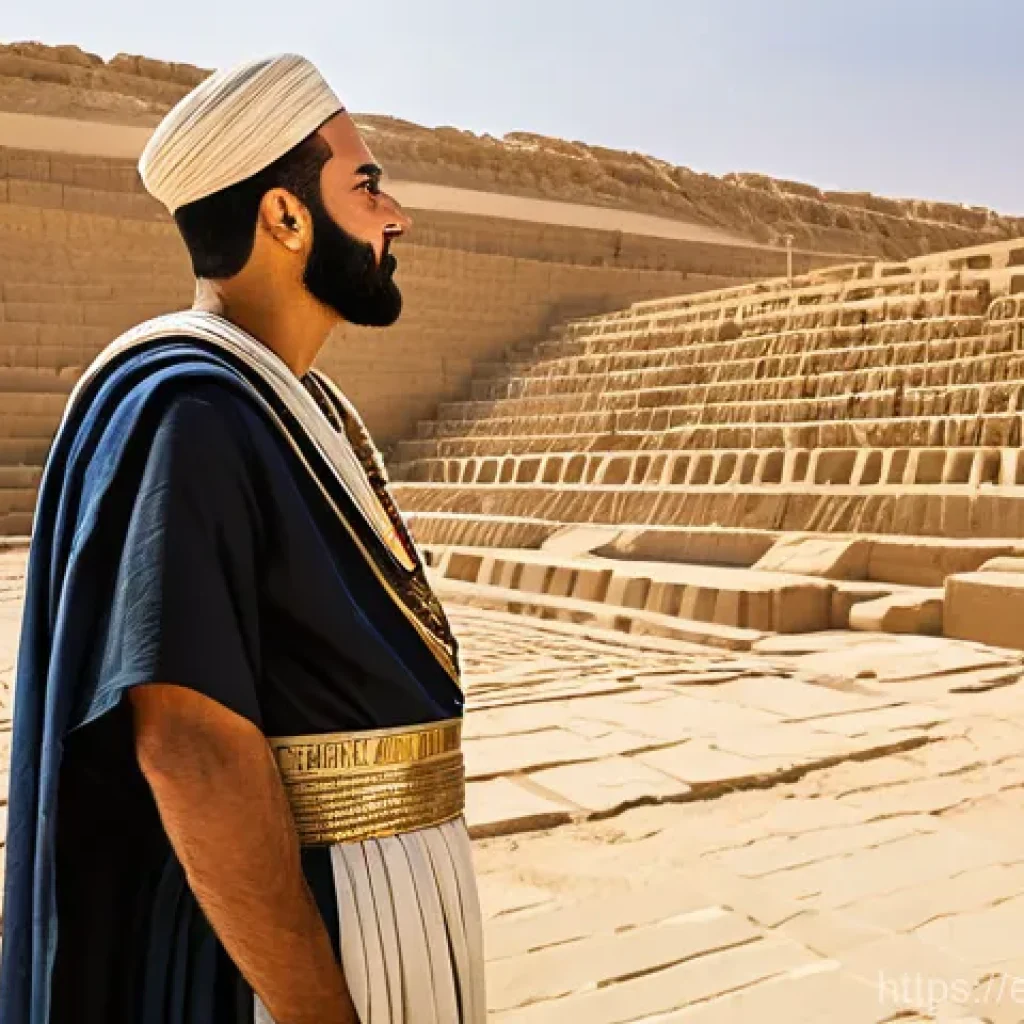
Have you ever gazed at the towering pyramids and found yourself completely captivated, not just by their monumental size but by the sheer human effort that must have gone into creating them?
I know I have! For ages, the story of ancient Egypt’s greatest architectural marvels has been shrouded in fascinating mysteries and powerful myths about how they were built and who exactly did the arduous work.
It’s time we look beyond the movie stereotypes and delve into the incredible reality of the ingenuity and organization that brought these wonders to life.
Get ready to discover the astonishing truth about the people and the methods behind the pyramids in detail.
Unveiling the Masterminds: More Than Just Pharaohs
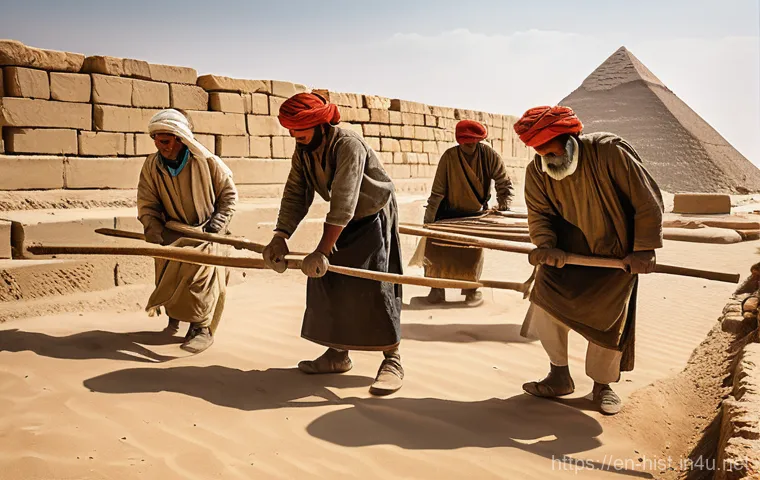
I’ve always been fascinated by the sheer scale of the pyramids, and like many, I initially pictured a pharaoh barking orders from a golden chariot. But what I’ve come to learn, and what truly blew my mind, is the incredible organizational genius that went into these projects.
It wasn’t just about raw power; it was about intricate planning, leadership, and a deep understanding of human potential. Think about it: moving millions of massive stones, coordinating thousands of workers, and doing all of this without modern machinery!
This wasn’t just a construction site; it was a highly sophisticated operation, a testament to ancient Egyptian administrative prowess. The masterminds weren’t just the kings; they were the architects, the scribes, the overseers, and even the logistics managers who ensured everything ran smoothly, from quarrying the stone to feeding the hungry workforce.
It makes you realize that true leadership isn’t just about command, but about vision and meticulous execution.
The Architects Behind the Vision
When I first delved into the specifics, I realized that the architects were the unsung heroes. These weren’t just artists with grand ideas; they were brilliant engineers and mathematicians.
Imhotep, for example, is often credited with designing the Step Pyramid, a revolutionary leap in architecture. Imagine being the person to conceptualize something so monumental, so unprecedented, that it would stand for millennia.
It really struck me how their understanding of geometry and astronomy, combined with practical building techniques, allowed them to create structures with such astonishing precision.
Their initial blueprints, if you can even call them that, must have been a marvel of planning, factoring in everything from material acquisition to the precise angles needed for stability.
Organizing the Workforce: A Feat of Management
My initial image of pyramid construction was quite chaotic, but the reality was anything but. This was a highly organized endeavor. They had a structured hierarchy, from high-ranking officials to skilled craftsmen and general laborers.
I remember thinking about modern construction projects with all our digital tools and communication systems, and then trying to picture coordinating tens of thousands of people with only papyrus and word of mouth.
It truly underscores the exceptional managerial skills these ancient Egyptians possessed. They managed resources, schedules, and personnel on a scale that would challenge many modern companies, proving that effective management principles are truly timeless.
The Daily Grind: What Life Was Really Like for Pyramid Builders
Forget the Hollywood stereotypes of enslaved masses toiling under the whip. What I discovered about the pyramid builders paints a vastly different, and honestly, more human picture.
These were often skilled laborers, farmers during the Nile’s inundation season, who were compensated for their work. Can you imagine dedicating yourself to such a monumental task, knowing that your efforts would contribute to something that would outlast empires?
It makes you think about purpose and community. Life wasn’t easy, certainly, but evidence suggests these workers were well-fed, housed, and even received medical care.
They weren’t just cogs in a machine; they were integral components of a national project, something that would have instilled a profound sense of pride and shared destiny.
I often try to put myself in their shoes, envisioning the camaraderie and the sheer physical effort, day in and day out, that forged not just a monument, but a legacy.
Housing and Sustenance: A City for Workers
When I learned about the worker villages discovered near the Giza plateau, it was a revelation. We’re talking about entire cities built to support the pyramid construction.
These weren’t temporary encampments; they were well-planned settlements complete with bakeries, barracks, and even cemeteries. It really hit me how much logistical foresight this required.
Imagine the daily task of feeding and housing thousands of people. My mind immediately went to the sheer volume of bread and beer that must have been produced!
It points to a sophisticated understanding of worker welfare, recognizing that a well-fed and rested workforce is a productive one. It really makes you question the narrative of brute force and recognize the careful planning that underpinned their success.
Medical Care and Community Life
Another aspect that truly surprised me was the evidence of advanced medical care. Skeletons found in worker cemeteries show signs of treated injuries, suggesting that doctors were on hand to mend broken bones and attend to other ailments.
This isn’t the picture of expendable labor, is it? It speaks to a level of care and value placed on these individuals. Furthermore, the presence of leisure activities and communal spaces suggests a vibrant community life.
They weren’t just working; they were living, building families, and creating a society within the shadow of these colossal projects. This human element, the sense of community and shared purpose, truly resonates with me and challenges the simplistic narratives we often hear.
Ingenious Engineering: Beyond Brute Force
Whenever I look at a pyramid, I’m struck by its geometric perfection. It’s easy to assume they just piled rocks, but the engineering involved was truly astounding.
We’re talking about precision leveling, perfect alignment with cardinal directions, and an understanding of physics that seems almost supernatural given the tools they had.
My mind always drifts to the methods they must have employed to achieve such accuracy, and it makes me appreciate the ingenuity of ancient minds. They weren’t just strong; they were incredibly smart, using clever techniques to overcome monumental challenges.
It’s a powerful reminder that innovation isn’t exclusive to modern times, and sometimes, the simplest solutions are the most effective.
Ramps and Levers: The Movers of Mountains
The exact methods for lifting and placing the massive stones are still debated, but the most widely accepted theories involve ramps and levers. I can almost visualize the coordinated effort: thousands of men pulling sledges up vast ramps, or meticulously positioning levers to inch colossal blocks into place.
It wasn’t about a single magic trick, but a series of carefully planned and executed maneuvers. The sheer scale of these ramps, some of which may have spiraled around the pyramids themselves, represents an engineering feat in itself.
It really highlights the problem-solving capabilities of these ancient builders, constantly adapting and innovating with the resources they had.
Precision and Alignment: A Cosmic Connection
One of the most mind-boggling aspects for me is the incredible precision of the pyramid alignments. They were often oriented with astounding accuracy to the cardinal points, and some even aligned with celestial bodies.
How did they achieve such perfect alignment without compasses or advanced surveying equipment? It speaks volumes about their astronomical knowledge and their meticulous attention to detail.
I’ve often wondered if they used observations of the stars or the sun’s shadow to guide their construction, linking their terrestrial creations to the heavens.
It really adds another layer of mystique and genius to these ancient wonders.
Logistics of a Colossal Project: Feeding and Housing Thousands
I used to think building a pyramid was just about moving stones, but then I started considering the human element on a grand scale. How do you feed, water, and supply tens of thousands of people working in the desert for decades?
This wasn’t just a construction project; it was a massive logistical operation, arguably one of the greatest in human history. It makes me think about modern supply chains and how much effort goes into them, and then I reflect on the ancient Egyptians doing it with incredible efficiency using far simpler means.
It truly underscores their administrative brilliance and their ability to plan for the long haul.
A Well-Oiled Supply Chain
The sheer volume of food, water, and tools needed to sustain the pyramid builders is staggering. Imagine the boats bringing supplies down the Nile, the caravans transporting goods to the sites, and the storage facilities required to house everything.
It really puts into perspective the sophistication of their supply chain management. They weren’t just building pyramids; they were building an entire support infrastructure around them.
My personal take is that this level of organized logistics is a huge part of why these projects were even possible. It’s a silent testament to the countless individuals working behind the scenes, ensuring the builders had what they needed to get the job done.
Water for the Desert Builders
Water in the desert is always a precious commodity, and ensuring a steady supply for thousands of workers and animals would have been an immense challenge.
They must have developed sophisticated systems for drawing water from the Nile and transporting it to the construction sites. I’ve always been curious about their methods for water storage and distribution – was it a network of wells, canals, or perhaps specialized pottery for transport?
It’s a detail often overlooked but absolutely critical to the success of such long-term projects. It makes you realize that every little detail, every resource, had to be meticulously accounted for.
Tools of the Trade: Simple Yet Effective Innovations
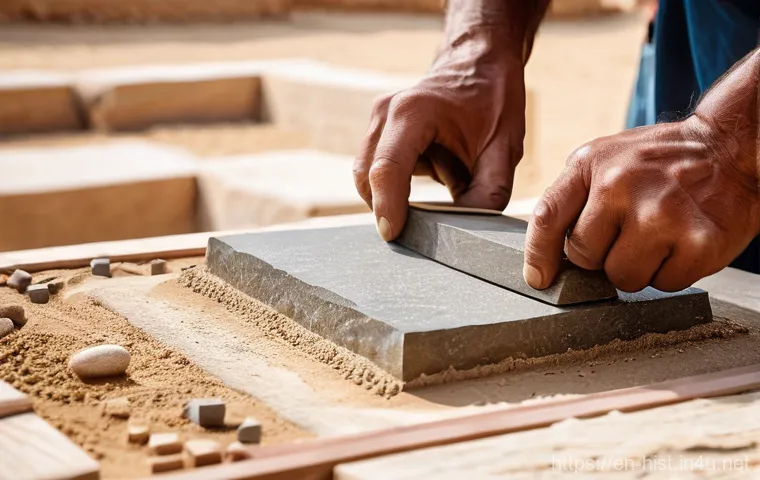
When I think about the tools they used to build the pyramids, I’m always amazed by their simplicity coupled with their effectiveness. We’re not talking about power tools or heavy machinery here.
It was all about clever application of basic principles – levers, ropes, and the raw strength of copper and stone. It makes me reflect on how resourceful humans can be when faced with monumental tasks.
They didn’t have the technology we have today, but they had ingenuity in spades, and that’s a lesson that always resonates with me. Sometimes, the most powerful tools are the ones you create from scratch with a clear purpose in mind.
Copper, Dolerite, and Human Might
The primary tools were often made of copper, a relatively soft metal. For harder stones, they relied on dolerite pounders and abrasive sands. It’s hard to imagine shaping and smoothing massive granite blocks with such rudimentary instruments, yet they did it with astonishing precision.
This isn’t just about brute force; it’s about skill, patience, and a deep understanding of materials. I’ve often pictured the rhythm of the workers, chipping away, day after day, slowly transforming rough stone into a polished surface.
It’s a powerful testament to the dedication and craftsmanship of these ancient artisans.
Ingenious Measuring and Leveling Techniques
How did they get everything so perfectly level and square? It’s a question that’s always puzzled me. They used simple yet incredibly effective methods, like water leveling for establishing flat surfaces and plumb bobs for vertical alignment.
Imagine the painstaking process of ensuring every single block was precisely placed. It really highlights their meticulous approach to construction, where every detail mattered.
It teaches us that precision doesn’t always require complex gadgets; sometimes, it just requires a keen eye and a steady hand.
Dispelling the Myths: Slaves or Skilled Workers?
For the longest time, the image of slaves building the pyramids has been etched into popular culture, largely thanks to Hollywood. But diving into the actual archaeological evidence completely reframes this narrative.
It’s one of those moments where what you thought you knew gets turned on its head, and it’s truly exciting to uncover the truth. The evidence overwhelmingly points to a workforce of skilled laborers, farmers, and artisans, who were often compensated for their work and held in high regard.
It’s a much more dignified and historically accurate portrayal of the incredible people who built these wonders.
Archaeological Discoveries at Giza
The discovery of worker cemeteries and settlements near the Giza pyramids has been crucial in dispelling the slave myth. These sites reveal that the workers were buried with respect, often with provisions for the afterlife, and had access to a relatively good diet and medical care.
This simply doesn’t align with the treatment of slaves. My personal reflection on this is how powerful archaeological evidence can be in correcting long-held misconceptions.
It allows us to give credit where credit is due, to the actual individuals who dedicated their lives to these monumental projects.
Compensation and National Service
Instead of forced labor, many scholars now believe that pyramid building was a form of national service or paid employment. Farmers, during the annual Nile flood when their fields were submerged, could contribute their labor to these state projects, receiving food, shelter, and sometimes other forms of compensation in return.
It transforms the narrative from one of oppression to one of community and collective effort. I think this aspect is particularly inspiring; it shows a society mobilizing its people for a grand, shared vision, a truly remarkable feat of human collaboration.
| Aspect | Common Myth | Archaeological Reality |
|---|---|---|
| Workforce | Enslaved people, brutalized and forced to work. | Skilled laborers, farmers fulfilling national service or paid workers. |
| Compensation | None, only harsh treatment. | Food, shelter, medical care, and possibly other forms of payment or societal benefits. |
| Living Conditions | Makeshift, unsanitary camps. | Well-planned worker villages with bakeries, barracks, and medical facilities. |
| Motivation | Fear of punishment. | Religious belief, national pride, community involvement, economic necessity. |
The Legacy Lives On: Lessons from Ancient Builders
Every time I reflect on the pyramids, I’m not just looking at old stones; I’m seeing a vibrant testament to human ingenuity, perseverance, and collaboration.
The lessons from these ancient builders aren’t just confined to history books; they’re incredibly relevant even today. They teach us about the power of vision, the importance of meticulous planning, and the incredible achievements that are possible when people work together towards a common, monumental goal.
It’s a powerful reminder that even without advanced technology, human spirit and cleverness can overcome what seem like insurmountable obstacles.
Enduring Principles of Project Management
Think about it: the pyramids are still standing, thousands of years later. That’s a pretty good track record for project management, wouldn’t you say?
They mastered resource allocation, scheduling, and risk management long before these terms even existed. It makes me smile to think that many of the core principles taught in business schools today were being applied with astonishing success by ancient Egyptians.
It’s a powerful reminder that fundamental truths about effective organization and execution are timeless, and these ancient builders truly understood them at their core.
A Testament to Human Collaboration
What really sticks with me is the sheer scale of human collaboration. Tens of thousands of people, from different backgrounds and with different skills, all working towards a single, shared objective.
It wasn’t just about building a tomb; it was about building a nation’s identity, a symbol of their faith and power. This level of unity and shared purpose is something I find incredibly inspiring.
It teaches us that when we come together with a clear vision and a commitment to hard work, there’s very little we can’t achieve. The pyramids stand as a silent, powerful monument to what collective human effort can accomplish.
Wrapping Things Up
This journey into the true story of the pyramid builders has been nothing short of inspiring for me. It completely reshaped my understanding of ancient Egypt, moving beyond the myths to reveal a civilization built on incredible intellect, meticulous planning, and unparalleled human effort.
It’s a powerful reminder that history is always more complex, and often more awe-inspiring, than the simplified narratives we sometimes encounter. Honestly, it makes me look at every ancient wonder with a fresh perspective, wondering what other incredible human stories are waiting to be uncovered.
Handy Tidbits to Keep in Mind
1. The Great Pyramids were not built by slaves, but by skilled, compensated laborers who likely worked during the Nile’s annual flood season, a truly fascinating twist to the common narrative.
2. Ancient Egyptian architects and engineers were brilliant, employing sophisticated mathematics, astronomy, and clever mechanical principles like ramps and levers, far beyond what simple brute force could achieve.
3. The logistics involved in feeding, housing, and managing tens of thousands of workers for decades were a monumental feat of ancient administration, akin to running a small city with incredible precision.
4. Worker villages found near the pyramid sites reveal well-organized communities with bakeries, barracks, and even medical care, challenging the perception of harsh, uncaring conditions.
5. The ingenuity and collaborative spirit demonstrated by these ancient builders offer timeless lessons in project management, leadership, and the power of shared vision that resonate even in our modern world.
Key Takeaways
The story of the pyramids is a testament to human potential. It teaches us that vision, meticulous planning, and collective effort can overcome even the most formidable challenges.
It’s a powerful reminder that history often holds deeper, more human truths than popular myths suggest, and that true innovation comes from resourceful problem-solving, regardless of the era.
Frequently Asked Questions (FAQ) 📖
Q: So, who exactly were the masterminds behind these ancient wonders? Were they, as so many movies suggest, slaves toiling under the scorching sun?
A: Oh, my friend, if you’re picturing hordes of enslaved people whipped into submission, it’s time to let go of that old Hollywood myth! It’s a story that has persisted for far too long, but the real builders of the pyramids were actually skilled, paid, and incredibly well-organized Egyptian laborers.
I remember the first time I learned this; it completely changed my perception! These weren’t just random individuals; they were a vast workforce of farmers, artisans, and specialized craftsmen, all living in purpose-built villages near the construction sites.
Think of it more like a massive national project, almost like a temporary city that sprang up around the pyramids themselves. They worked in shifts, were provided with food, housing, and even medical care.
Archaeological discoveries at sites like Giza have unearthed settlements with bakeries, breweries, and even cemeteries where these workers were buried with respect, indicating they were valued members of society, not enslaved individuals.
It really paints a different, and frankly, much more inspiring picture of human cooperation and ingenuity, doesn’t it?
Q: How on earth did they manage to move those colossal stones, some weighing many tons, without any modern machinery? It just boggles my mind!
A: This is the question that truly captivates everyone, myself included! Every time I see a picture of those massive blocks, I can’t help but marvel. While the exact methods still hold some captivating mysteries, archaeologists and engineers have pieced together some truly ingenious techniques.
It certainly wasn’t about brute force alone! Imagine this: they likely used a combination of ramps, levers, and sledges. The stones were quarried, often miles away, and then hauled over specially prepared slipways lubricated with water or even wet clay to reduce friction.
Think about that for a second – using water to make heavy stones glide! Teams of workers would pull these sledges using ropes, coordinating their efforts with chants.
For lifting, they probably employed various types of ramps – straight ramps, spiraling ramps, or even zigzagging ramps up the sides of the pyramids. As the pyramid grew, so did the ramp, allowing them to drag the stones higher and higher.
It wasn’t about one single trick, but a symphony of simple machines and brilliant organization, proving that sometimes, the most elegant solutions are the simplest, when applied with immense collective effort.
Q: What was daily life like for these pyramid builders? I mean, it must have been an incredibly tough job.
A: You’re absolutely right, it was undeniably a demanding job, but it was also a life filled with purpose and community! From what we understand, these were not just nameless faces in the desert.
They lived in bustling, organized settlements specifically designed for them. Imagine waking up in a village with your fellow workers, grabbing a hearty breakfast of bread and beer (a staple in ancient Egypt!), and then heading to the construction site.
Their days would have been long and physically strenuous, but they weren’t working every single day of the year. During the annual Nile flood, when fields were submerged and farming wasn’t possible, many farmers would volunteer for pyramid construction, seeing it as a way to contribute to their pharaoh’s eternal life and secure their own well-being.
There was a sense of camaraderie, I’m sure, and a shared goal that would have been incredibly powerful. After a hard day, they’d return to their living quarters, eat, perhaps socialize, and rest, ready for another day of building immortality.
It’s not just about the stones, but about the vibrant, hard-working lives that brought them together. It really puts into perspective the human spirit, doesn’t it?