Hey there, fellow history buffs and global citizens! Have you ever found yourself wondering how events from decades ago continue to shape our world, impacting everything from international relations to the headlines we read today?
I’ve personally always been fascinated by those pivotal moments that leave such deep, enduring imprints on the global stage. One such period, often referred to as the ‘Forgotten War’ in many Western narratives, is the intense conflict that engulfed the Korean Peninsula over seventy years ago.
This wasn’t just another skirmish; it was a brutal three-year struggle that not only tore a nation apart but also solidified the ideological battle lines of the Cold War, essentially creating the deeply entrenched division we still witness today at the 38th Parallel.
The armistice signed in 1953 stopped the fighting, but importantly, it never led to a peace treaty, leaving the Korean Peninsula technically still at war.
It’s a poignant and complex story of immense human cost, geopolitical maneuvering, and the ongoing ripples that continue to influence global security, including North Korea’s nuclear ambitions and the persistent tensions in Northeast Asia.
If you’re ready to truly understand the roots of one of the world’s most critical geopolitical fault lines, then you’re absolutely in the right spot. Let’s peel back the layers and uncover the profound origins and lasting impact of this pivotal chapter in human history right here.
The Shadow of the Cold War: A Peninsula Divided
You know, it’s truly wild to think about how decisions made by powerful nations, sometimes thousands of miles away, can fundamentally alter the destiny of a place and its people for generations. That’s exactly what happened on the Korean Peninsula after World War II. When Japan’s colonial rule finally ended in 1945, there was this immense hope for a unified, independent Korea, a dream that had been suppressed for so long. But almost immediately, the looming shadow of the burgeoning Cold War cast a dark pall over everything. It was as if the world’s emerging ideological battle between communism and capitalism found its first major battleground right there, before the actual fighting even began. The division wasn’t just geographical at the 38th parallel; it was a deeply ideological split, carving a nation into two distinct political entities. I can only imagine the confusion and despair for ordinary Koreans who simply wanted to rebuild their lives, only to find themselves caught between two superpower ideologies, neither of which truly prioritized Korean self-determination over their own global chess match. It’s a stark reminder of how geopolitical forces can overshadow local aspirations, laying the groundwork for future tragedies.
The Genesis of a Divided Nation
Honestly, when I first learned about how Korea was divided, it really struck me as an almost casual decision with monumental consequences. After Japan’s surrender, the United States and the Soviet Union, as victors, basically drew a line across the country, ostensibly to accept the Japanese surrender in their respective zones. The Soviets set up shop in the north, backing a communist regime under Kim Il Sung, while the Americans supported a capitalist-leaning government in the south, led by Syngman Rhee. Both leaders, of course, dreamt of unifying the peninsula under their own system, setting the stage for an inevitable clash. This wasn’t just a peaceful separation; there were already simmering tensions, border skirmishes, and guerrilla warfare long before June 1950. It was a pressure cooker building up, and you could feel the world holding its breath, wondering when it would finally explode. It’s like watching two trains on a collision course, and despite everyone seeing it coming, no one seemed able to avert the disaster.
Ideological Battleground: Capitalism vs. Communism
This period really highlights how deeply intertwined local conflicts became with the broader Cold War struggle. The Korean Peninsula wasn’t just fighting for its own future; it became a symbol, a proxy stage for the global ideological showdown. For the Soviet Union and China, securing a communist Korea was a strategic imperative, a way to expand their influence and create buffer zones. On the other side, the United States saw the containment of communism as its paramount goal, viewing any expansion as a direct threat to global freedom and democracy. I sometimes try to put myself in the shoes of those living through it – imagine your homeland becoming the very front line of a global struggle you had little control over. It magnified everything, turning what might have been a civil conflict into an international crisis, drawing in major powers and setting precedents for future proxy wars across the globe. The stakes felt impossibly high, and the world watched, fearing that this “limited war” could quickly spiral into something far, far worse.
When the Lines Blurred: The Sudden Onset of Conflict
I remember reading about the invasion of South Korea and just thinking, “Wow, that must have been absolutely terrifying.” On June 25, 1950, North Korean forces, heavily armed and backed by the Soviets, poured across the 38th parallel. It wasn’t a subtle move; it was a full-scale assault designed to overwhelm and reunify the peninsula by force. South Korea, caught largely unprepared, was pushed to the brink almost immediately, with their capital, Seoul, falling within days. This wasn’t just a regional conflict anymore; it instantly escalated onto the world stage. For the United States, still reeling from WWII and trying to navigate this new Cold War landscape, it was a moment of profound realization: the threat of communist expansion wasn’t theoretical; it was happening right now, in real-time. President Truman famously viewed it through the lens of stopping another Hitler, believing that unchecked aggression would inevitably lead to another world war. It’s a testament to how quickly a regional spark can ignite global alarm bells, especially when superpowers are already eyeing each other suspiciously. The speed and scale of the invasion truly underscored the fragile peace of the post-war world.
The North’s Blitzkrieg
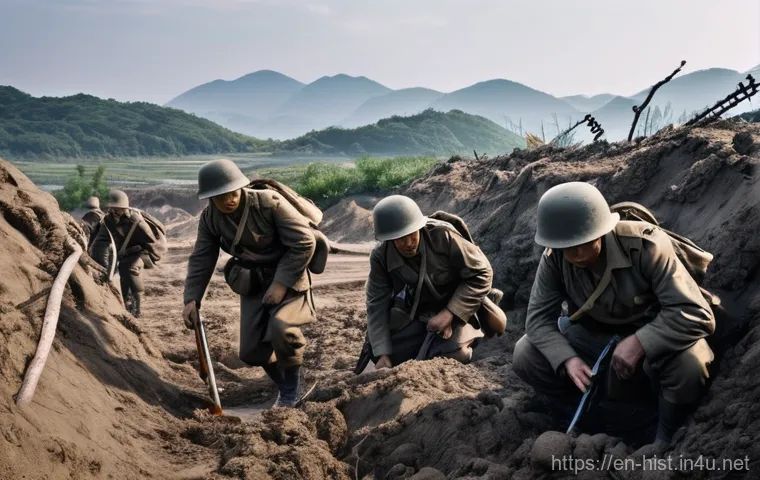
The initial North Korean offensive was incredibly swift and devastating. Their forces, well-equipped with Soviet tanks and artillery, just swept through South Korean defenses. It was a shock to everyone, especially the unprepared South Korean and small American advisory forces. I can only imagine the sheer chaos and panic as people fled south, trying to escape the advancing front lines. It was a race against time, a desperate struggle to hold onto any piece of territory. The United Nations, spurred by the U.S., quickly condemned the invasion and authorized military intervention, marking a crucial moment for the fledgling international body. But even with the UN’s backing, the situation looked dire. South Korean and UN forces were cornered into a small defensive perimeter around the city of Pusan in the southeast, clinging on by a thread. It was a true make-or-break moment, and the world held its breath, wondering if the entire peninsula would fall.
A Swift Global Response and the Pusan Perimeter
The response, though initially staggered, showed the world that collective security, even in its early stages, could mobilize. The United States quickly committed troops, forming the core of the UN Command, but soldiers from many other nations also answered the call. I always find it inspiring how different countries came together under the UN flag, recognizing the need to resist aggression. The Pusan Perimeter became the last stand, a desperate defensive line where every inch of ground was fiercely contested. It was a testament to human resilience and the sheer will to survive. Holding that perimeter was crucial; it prevented the complete takeover of South Korea and provided the necessary time for a counteroffensive to be planned and executed. Without that incredibly tough defense, the story of the Korean War, and indeed the entire geopolitical landscape of Asia, would be drastically different. It’s a powerful lesson in holding the line, even when all hope seems lost.
A Global Effort, a Brutal Fight: The Tide of War Turns
After the initial shock of the North Korean invasion, there was a palpable shift in momentum, thanks to some truly audacious military planning. General Douglas MacArthur’s Inchon landing operation, which aimed to cut off North Korean supply lines and trap their forces, felt like something out of a movie. I mean, landing thousands of troops behind enemy lines in a place with incredibly challenging tides and terrain? It was a massive gamble, but it paid off spectacularly. This strategic masterstroke completely turned the tide of the war, leading to the recapture of Seoul and pushing the North Koreans back across the 38th parallel. The relief must have been immense, but it also introduced a new, complex question: what now? The original objective was to restore the status quo, but with victory seemingly within reach, the temptation to push further north and unify the entire peninsula under a democratic government became incredibly strong. It’s a classic example of how battlefield successes can sometimes create even trickier political dilemmas, transforming a defensive war into one of liberation.
The Daring Inchon Landing
The stories from the Inchon landing are just incredible. The sheer logistical nightmare of coordinating such a massive amphibious assault, coupled with the unpredictable tides of the Yellow Sea, makes it one of the most remarkable military operations in history. As the UN forces surged forward, I can only imagine the hope it ignited in the South and the panic it sowed in the North. It was a brilliant, almost desperate, move that completely reshaped the battlefield, proving that innovation and daring could overcome numerical superiority. This was a moment when the future of South Korea hung in the balance, and the courage and strategic genius displayed truly saved the day, at least in that phase of the war. It’s one of those historical events that makes you pause and think about the human capacity for ingenuity under immense pressure.
China’s Entry and a War of Attrition
Just when it seemed like the UN forces were on the verge of victory, pushing deep into North Korean territory and nearing the Yalu River, which borders China, everything changed again. China, feeling its own security threatened by the approach of UN troops, intervened massively, sending hundreds of thousands of “People’s Volunteer Army” soldiers across the border. This completely caught the UN forces off guard and marked a brutal, bloody new phase of the war. It transformed the conflict from a swift campaign into a grinding war of attrition, characterized by fierce battles over brutal, mountainous terrain and incredibly harsh winters. For those on the ground, it must have been utterly demoralizing to face a seemingly endless wave of new enemies just when they thought the end was in sight. My heart goes out to all who endured those conditions; it was a brutal awakening to the true global scale of this conflict and the dangerous limits of intervention.
The Human Toll: Scars That Remain Etched Deep
When we talk about wars, it’s easy to get caught up in the geopolitical strategies, the troop movements, and the political outcomes. But I always try to remember that behind every statistic is a human life, a family shattered, a community devastated. The Korean War, often called the “Forgotten War” in some parts of the world, was anything but forgotten by those who lived through it. The human cost was absolutely staggering, with estimates of military and civilian deaths reaching into the millions. Imagine entire cities reduced to rubble, people losing everything they had, and families torn apart, many never to be reunited. It’s a heartbreaking thought, and frankly, it puts so much into perspective about the true price of conflict. This wasn’t just a clash of armies; it was a systematic destruction of a society, leaving physical and emotional scars that run incredibly deep, even seventy years later.
A Nation in Ruins: Destruction and Displacement
The sheer scale of destruction across the Korean Peninsula was almost unfathomable. Cities like Pyongyang and Seoul were repeatedly captured and recaptured, bombed into oblivion. I’ve seen photos from that era, and they look like something out of an apocalyptic movie – buildings flattened, infrastructure destroyed, a landscape of despair. Millions of people were displaced, becoming refugees in their own country, desperately seeking safety and food amidst the chaos. Imagine the psychological trauma of constantly fleeing, living in fear, and losing loved ones with no warning. The war didn’t just divide a country; it decimated it, leaving behind a legacy of immense suffering and a monumental task of rebuilding. It reminds me that war isn’t just about winning or losing; it’s about the fundamental unraveling of lives and societies.
Families Divided, Lives Unfinished
Perhaps one of the most poignant and enduring legacies of the Korean War is the tragic reality of separated families. When the fighting ceased and the border hardened into the heavily fortified Demilitarized Zone (DMZ), hundreds of thousands of Koreans found themselves on opposite sides, unable to communicate, visit, or even know if their loved ones were alive. It’s a wound that has never truly healed. Think about it: parents separated from children, siblings from each other, spouses torn apart, for decades. While there have been sporadic, heartbreaking reunions over the years, they are few and far between, and time is relentlessly running out for these first generations. Every time I hear about these reunions, I’m moved by the profound joy mixed with unbearable sorrow, knowing that so many will never get that chance. This truly highlights the profound personal costs that statistics can never fully capture.
An Uneasy Truce: The Forever War’s Lingering Echo
You know, it’s pretty wild to wrap your head around the idea that a war that “ended” in 1953 is technically still ongoing. That’s the bizarre reality of the Korean War. When the fighting finally ground to a halt on July 27, 1953, it wasn’t with a peace treaty, but with an armistice agreement. This military document simply stopped the shooting and established the Military Demarcation Line and the now-infamous Demilitarized Zone (DMZ), a four-kilometer-wide buffer that slices across the peninsula. For over seventy years, this uneasy truce has held, but it’s a peace built on military readiness and constant tension, not on reconciliation or a diplomatic resolution. I sometimes wonder what it must be like for people living so close to that border, knowing that at any moment, things could escalate. It’s a fragile quiet, punctuated by occasional provocations, serving as a constant reminder that the underlying conflict has never truly been resolved. It feels like a chapter of history that was paused, not concluded, and the implications of that pause are still very much with us today.
The Armistice Agreement: A Military Standstill
The armistice itself was a lengthy and arduous negotiation process, stretching over two years with 158 meetings! Imagine sitting across from your adversaries for that long, trying to hammer out the details of a ceasefire while fighting still raged. The agreement focused purely on military matters: halting hostilities, establishing the DMZ, and repatriating prisoners of war. It deliberately left political questions for future negotiations, which, tragically, never bore fruit. South Korea, under President Syngman Rhee, actually refused to sign the armistice, wanting to continue fighting to unify the peninsula by force. This deep-seated division, even among the allies, foreshadowed the difficulties that would prevent a true peace. So, while the guns fell silent, the political and ideological battle continued, simply moving from the battlefield to the diplomatic stage, where it remains unresolved to this day.
The Demilitarized Zone: A Silent Divide
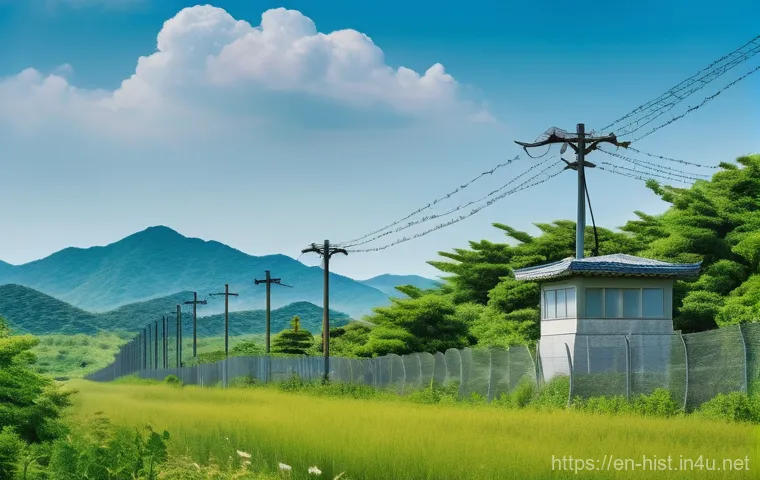
The DMZ is one of the most heavily fortified borders in the world, a stark physical manifestation of the unresolved conflict. Yet, ironically, within its heavily restricted confines, nature has flourished, creating a unique ecological haven. I find that contrast incredibly poignant – a testament to life finding a way, even in the shadow of immense human conflict. But for all its natural beauty, the DMZ remains a symbol of deep animosity, patrolled by soldiers on both sides, a constant reminder that the war isn’t truly over. It’s a place where you can literally feel the tension in the air, a silent but potent barrier between two worlds that started from the same place. It highlights the enduring power of political division to reshape landscapes and lives, creating a sort of frozen moment in time, waiting for a resolution that has yet to come.
Beyond the Battlefield: Shaping Modern Geopolitics
The Korean War didn’t just end on the peninsula; its ripples spread far and wide, fundamentally reshaping the global geopolitical landscape for decades to come. This conflict really solidified the Cold War as a worldwide phenomenon, turning abstract ideological differences into tangible, bloody confrontations. For the United States, it cemented the policy of “containment” and led to a massive increase in defense spending and a strengthening of alliances, like NATO. It also set a concerning precedent for presidential war powers, being the first major overseas U.S. conflict without a formal declaration of war by Congress – a legacy that still sparks debate today. I often think about how this war, often overlooked, actually laid the groundwork for future interventions and military doctrines, including those that influenced the Vietnam War. It was a crucible where new forms of international engagement and military strategy were forged, leaving an indelible mark on how nations interact and prepare for conflict.
The Cold War’s Intensification and Alliance Building
There’s no doubt in my mind that the Korean War turbocharged the Cold War. It showed both the US and the USSR that “limited wars” could be fought through proxies, rather than direct, potentially nuclear, confrontation. This revelation pushed both superpowers to bolster their military might and solidify their alliances. For the Western bloc, it accelerated a peace agreement with Japan and strengthened ties among democratic nations. On the other side, it complicated relations between China and the Soviet Union but also strengthened communist solidarity in the face of perceived Western aggression. This period was a frantic scramble for influence, military supremacy, and the building of blocs that would define international relations for the next four decades. It’s like the war acted as a huge, terrifying catalyst, speeding up trends that were already in motion and creating a more polarized world.
A Precedent for Future Conflicts
One aspect of the Korean War that I find particularly fascinating, and a little unsettling, is the precedent it set for how modern conflicts are conducted. It introduced the concept of “limited war,” where superpowers fought without directly engaging each other, mindful of the looming threat of nuclear escalation. This model, unfortunately, found its echo in conflicts like Vietnam. What’s more, the way the US entered the war without a congressional declaration became a template for subsequent presidential actions, expanding the executive branch’s authority in foreign military engagements. This has truly shaped contemporary debates about war powers and the role of the president in international affairs. It makes me reflect on how historical moments, even those seemingly distant, can have profound, long-lasting impacts on democratic processes and the balance of power.
North Korea’s Nuclear Path: A Direct Line from History
It’s impossible to talk about the Korean War’s legacy without addressing North Korea’s nuclear ambitions. To me, it feels like a direct, albeit tragic, consequence of that unresolved conflict. For North Korea, the war, and particularly the devastating US bombing campaigns, etched a deep-seated fear of external aggression and a fervent desire for self-preservation into their national psyche. This fear, coupled with the ongoing state of armistice rather than peace, has fueled their pursuit of nuclear weapons as the ultimate deterrent. They look at the world and see a permanent threat, believing that a robust nuclear arsenal is the only guarantee of their survival and sovereignty. I’ve often thought about how different things might be if a formal peace treaty had been signed in 1953; perhaps their path would have been less isolated and less militarized. But without that, the ghost of the Korean War continues to haunt the peninsula, manifesting in a nuclear standoff that keeps the world on edge. It’s a stark illustration of how historical grievances, left unaddressed, can spiral into some of the most pressing challenges of our time.
The Security Imperative: From Soviet Aid to Self-Reliance
North Korea’s nuclear program didn’t just appear out of nowhere; its roots stretch back to the 1950s, when they first began receiving assistance from the Soviet Union for nuclear research. Initially, this was for peaceful purposes, but the underlying motivation was always security in a deeply hostile environment. As the Cold War evolved and the Soviet Union eventually collapsed, North Korea couldn’t rely on a powerful patron anymore. This shift dramatically intensified their drive for self-reliance in defense, leading to the earnest development of their own nuclear weapons capabilities starting in the 1970s and 80s. I think it’s crucial to understand this historical context to grasp why their leadership views these weapons as non-negotiable. They’ve consistently framed it as a defensive measure, a guarantee against what they perceive as existential threats.
A Continuous Threat: Deterrence and Regional Instability
Today, North Korea’s nuclear program is a central feature of Northeast Asian security, creating persistent tension and a complex web of deterrence. Every missile test, every nuclear declaration, sends shockwaves through the region and beyond. For countries like South Korea and Japan, it raises fundamental questions about their own defense and the reliability of their alliances. I’ve personally followed the news on this for years, and it’s a constant, unsettling reminder of the lingering effects of the Korean War. The regime uses its nuclear arsenal not just for deterrence, but also as leverage in international negotiations and as a source of national pride, however controversial. It’s a dangerous game, one that highlights the deep, unresolved trauma of a war that officially never ended, forcing us all to confront the ongoing consequences of a conflict many have long since forgotten.
| Key Phases of the Korean War (1950-1953) | Description | Key Players |
|---|---|---|
| Initial North Korean Offensive (June-Sept 1950) | North Korea invades South Korea, quickly pushing UN and ROK forces to the Pusan Perimeter. Seoul falls within days. | North Korea (DPRK), Soviet Union (support), South Korea (ROK), United States, United Nations |
| UN Counteroffensive and Push North (Sept-Oct 1950) | Daring Inchon Landing by UN forces turns the tide, leading to the recapture of Seoul and UN forces advancing deep into North Korea. | United States, South Korea, United Nations, North Korea |
| Chinese Intervention and Stalemate (Oct 1950-July 1951) | China enters the war, pushing UN forces back across the 38th parallel. The conflict devolves into a brutal war of attrition around the original border. | China (PVA), North Korea, United States, United Nations, South Korea |
| Armistice Negotiations and Ceasefire (July 1951-July 1953) | Protracted negotiations occur while fighting continues. An armistice is signed, establishing the DMZ and a ceasefire, but no formal peace treaty. | United Nations Command, North Korea, China |
Wrapping Things Up
As we delve into the intricate history of the Korean War, it’s impossible not to feel the lingering echoes of its profound impact. This conflict, often overshadowed by World War II and Vietnam, remains a powerful testament to the devastating human cost of ideological divides and geopolitical maneuvering. It’s a story not just of battles and treaties, but of families torn apart, cities rebuilt from ash, and a peninsula forever changed. Reflecting on it, I’m always struck by how historical events, even those from decades past, continue to shape our present and influence the future of international relations. Remembering these lessons isn’t just about honoring the past; it’s about understanding the complex world we inhabit today.
Handy Tidbits to Keep in Mind
1. The Korean War officially lasted from June 25, 1950, to July 27, 1953, but it concluded with an armistice, not a formal peace treaty, meaning the two Koreas are technically still at war.
2. The Demilitarized Zone (DMZ) is one of the most heavily guarded borders globally, yet within its confines, it has become an unintended ecological sanctuary due to the absence of human intervention.
3. Over 20 nations contributed to the UN Command during the war, with the United States providing the largest contingent, highlighting an early example of collective international security efforts.
4. The war dramatically accelerated the Cold War, cementing the policy of containment and significantly increasing defense spending for many Western nations, influencing global military strategy for decades.
5. Millions of civilians suffered immense casualties, displacement, and permanent separation from family members, a poignant and deeply personal legacy that continues to affect Koreans today.
Key Takeaways
The Korean War serves as a stark reminder of the devastating consequences of unresolved ideological conflict and superpower proxy wars. It left an indelible mark on the Korean Peninsula, permanently dividing a nation and fostering a deep-seated security imperative that continues to drive North Korea’s nuclear ambitions. This “Forgotten War” profoundly reshaped global geopolitics, setting precedents for international interventions and alliance building that continue to influence the world order today, emphasizing the enduring need for diplomatic resolution over military standoffs.
Frequently Asked Questions (FAQ) 📖
Q: uestions
A: bout The Korean War
Q: Why do some historians and people refer to the Korean War as “The Forgotten War,” and how significant was it really on the global stage?
A: Oh, that’s such a fantastic question, and one I’ve pondered myself! When I first delved into the Korean War, I was genuinely surprised by how often it gets overlooked in Western historical narratives, especially when compared to World War II or the Vietnam War.
It truly earned that moniker “The Forgotten War” for a reason. I think part of it is because it was sandwiched right between those two massive conflicts.
Plus, it didn’t end with a clear-cut victory or defeat for either side; it was an armistice, a stalemate. This ambiguity, I believe, made it harder for people to neatly categorize and remember it.
But let me tell you, its significance was absolutely monumental, not just for the Korean Peninsula, but for the entire world. From my perspective, it was the first “hot war” of the Cold War, setting the stage for decades of geopolitical maneuvering.
It redefined proxy wars, pushed the UN into its first major military action, and even led to a massive rearmament in the West. If you ask me, understanding the Korean War is key to grasping the very foundations of modern international relations and the balance of power we still see today.
Q: You mentioned the 38th Parallel and how the armistice never led to a peace treaty. What does “technically still at war” mean for the Korean Peninsula right now, and what are the real-world implications?
A: This question gets right to the heart of why this war, even after all these years, is anything but “forgotten” for the millions of people living on the peninsula!
The 38th Parallel, initially an arbitrary line chosen for post-WWII occupation, tragically became the de facto border dividing North and South Korea. And yes, you hit the nail on the head: “technically still at war.” It sounds wild, doesn’t it?
It means that since the 1953 armistice, there’s been no formal peace treaty signed. So, legally speaking, the two Koreas are just in a prolonged ceasefire.
I’ve often thought about what that must feel like – living under the constant shadow of potential renewed conflict. For real-world implications, think about the heavily fortified Demilitarized Zone (DMZ), one of the most heavily guarded borders on Earth.
It’s not just a symbolic line; it’s a palpable tension that shapes everything from diplomatic relations to the daily lives of people. This unresolved status is also a massive driver behind North Korea’s pursuit of nuclear weapons, seeing them as a deterrent against what they perceive as ongoing hostility from the South and its allies.
It really puts into perspective the precarious balance in Northeast Asia, don’t you think?
Q: How did the Korean War solidify the ideological battle lines of the Cold War, and what long-term impact did that have on global politics?
A: Ah, this is where things get super fascinating from a global perspective! Before the Korean War, the Cold War was simmering, a war of words and proxy skirmishes, but the invasion of South Korea by the North absolutely threw gasoline on that fire.
I’ve always felt that this conflict was the moment the ideological clash between communism and capitalism became brutally real and militarized. Suddenly, it wasn’t just about spheres of influence or political rhetoric; it was about tanks, artillery, and huge casualties.
For the West, it galvanized the idea of containing communism and justified massive military spending and alliances like NATO’s expansion. On the other side, it strengthened the Soviet Union’s resolve to support communist movements globally and cemented their alliance with China.
The long-term impact? Gosh, where do I even begin? It solidified a deeply entrenched ideological divide that lasted for decades, fueled the arms race, and directly influenced subsequent conflicts like the Vietnam War, which many saw as another front in the same global struggle.
It also cemented the US’s role as a global superpower committed to defending its allies, especially in Asia, a commitment that continues to shape security policy even today.
It was, in many ways, the blueprint for the global geopolitical chess game that defined the latter half of the 20th century.