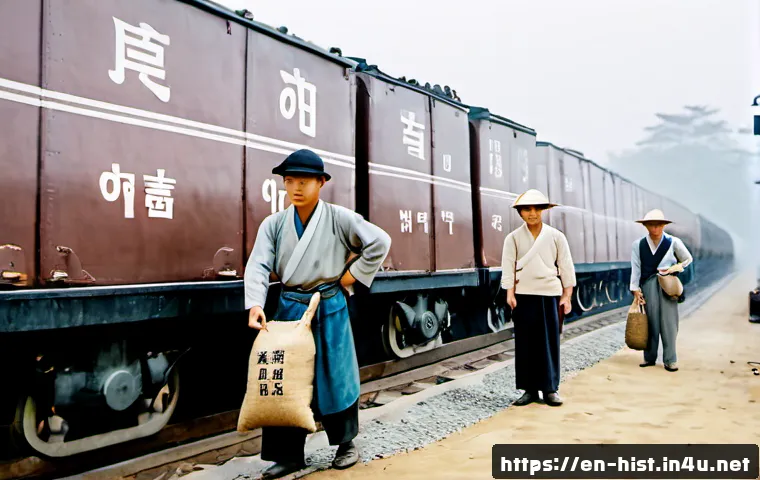
Japanese colonial rule redirected Korea’s economy by combining administrative control of land, expanded production, imperial trade integration, and, later, coercive wartime labor mobilization.
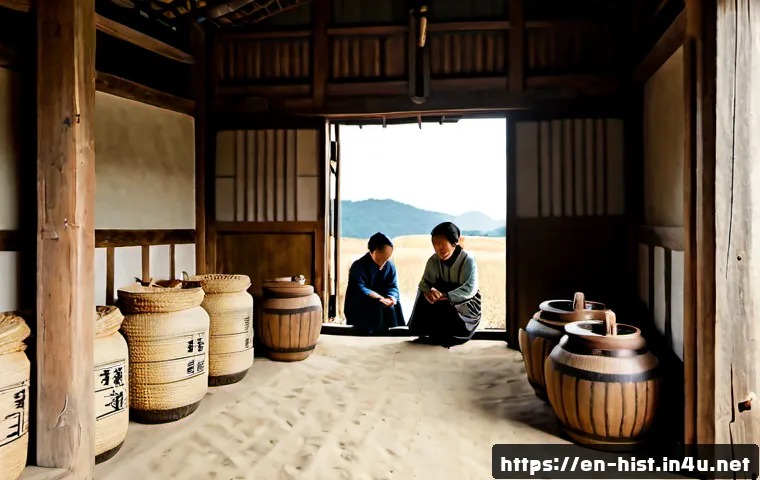
Railways and industrial sites expanded, but infrastructure alone does not show who controlled decisions, received profits, or bore the costs. A useful way to study this period is to examine land, rice, industry, trade, and labor as connected systems rather than as isolated events.
This framework helps students and general readers compare history books, documentaries, archive collections, and online courses without reducing the subject to a single slogan.
Reliable resources explain their sources, distinguish evidence from interpretation, and acknowledge differences across regions and social groups. The question is not simply whether the economy changed, but how benefits, risks, and power were distributed.
At a Glance
- Japanese colonial administration reshaped landownership rules, agricultural production, trade connections, and industrial development in Korea from 1910 to 1945.
- Economic expansion and imperial control operated together; new infrastructure did not automatically mean equal public benefit.
- During the Asia-Pacific War, economic coercion intensified as many Koreans were mobilized for labor under wartime systems.
| Mechanism | Stated or Practical Purpose | Likely Beneficiaries | Affected Groups | Evidence to Check |
|---|---|---|---|---|
| Land administration | Register ownership through a new legal and administrative system | Recognized owners and institutions able to navigate formal procedures | Cultivators, tenants, and people whose claims lacked formal recognition | Registration rules, local records, ownership claims, and tenancy evidence |
| Rice policy and trade | Expand rice production and distribution within the Japanese empire | Imperial distribution networks and actors controlling trade decisions | Rural producers and consumers affected by food supply priorities | Production records, distribution patterns, and local food-supply context |
| Infrastructure and industry | Expand transport, power, industrial capacity, and strategic production | Colonial authorities and organizations directing investment and output | Workers, local communities, and regions connected unevenly to development | Who financed, controlled, used, and profited from facilities |
| Wartime labor mobilization | Meet wartime production and labor needs | The imperial wartime economy | Koreans mobilized under coercive wartime systems | Source-specific documentation on recruitment, conditions, compensation, and casualties |
The Short Answer: Colonial Control Reshaped Who Owned, Produced, and Benefited
Japanese rule after the formal annexation of Korea in 1910 did not affect one part of the economy alone. It changed the administrative setting in which land was recognized, encouraged agricultural production tied to imperial needs, expanded transport and industrial facilities, and connected Korea more closely to Japan’s imperial trade and production networks.
The central point is simple: economic change is not the same as equal economic benefit. A railway, port, power facility, or factory can increase productive capacity while also serving strategic priorities set outside the local population. The historical question therefore includes ownership, decision-making, labor conditions, food supply, and the distribution of gains.
Land, labor, trade, and industry worked as connected systems
Land administration influenced who could make recognized ownership claims. Agricultural policy shaped what was produced and where it was distributed. Railways and ports made movement of goods easier, while industrial sites and power facilities supported expanded production. During wartime, labor mobilization pushed these systems toward more direct coercion.
Looking at only one element can produce a misleading conclusion. For example, a reader who sees infrastructure but ignores control over production may miss the wider imperial structure. A reader who focuses only on administrative policy may miss how rural, industrial, and wartime pressures interacted.
Why economic growth indicators alone do not settle the historical question
Growth indicators can show that production, trade, or infrastructure expanded. They cannot, by themselves, establish who benefited most, who carried the burdens, or whether local communities had meaningful control. Development claims need distributional evidence, not just a list of new facilities.
When comparing a history book, museum resource, documentary subscription, or online course, look for material that separates measurable expansion from broader claims about welfare or public benefit. Good educational materials state what their evidence can show and what still requires interpretation.
A Comparison Framework for Understanding Colonial Economic Policy
A clear framework prevents broad claims from becoming vague. Start with the mechanism, identify the people affected, and then ask what records would support the conclusion. This approach is useful whether you are choosing an academic history book, reviewing archive databases, or evaluating a documentary.
Land administration and ownership recognition
The colonial government conducted a land survey project during the 1910s. It registered landownership under a new legal and administrative system. Because registration requirements and documentation practices mattered, cultivators whose claims were not formally recognized could be disadvantaged.
This does not mean every cultivator experienced the same outcome. Individual land-loss outcomes must be examined case by case. Local documentation, recognized ownership, tenancy arrangements, and access to administrative processes all matter when interpreting a particular claim.
Rice production, food supply, and imperial trade
Agricultural policy under colonial rule emphasized rice production and distribution within the Japanese empire. This places farming in a wider system of imperial supply and trade rather than treating it only as a local rural activity.
To assess the impact, ask what happened to production priorities, how distribution was organized, and how food-supply concerns affected different groups. A useful source does not assume that more output automatically meant better conditions for all producers or consumers.
Infrastructure and industrial expansion
Railways, ports, power facilities, and industrial sites expanded during the colonial period. These projects supported economic development, but they also served imperial strategic goals. Their presence is important evidence of change, not a final verdict on the colonial economy.
Readers should ask who selected routes, directed investment, controlled industrial decisions, and received the resulting gains. Infrastructure is a tool; it is not a complete measure of public benefit.
Labor mobilization and wartime production
During the Asia-Pacific War, many Koreans were mobilized for labor under coercive wartime systems. This marked an escalation in economic pressure, because labor was drawn directly into wartime production needs.
Claims about recruitment, working conditions, compensation, and casualties require careful, source-specific verification. Broad statements may be emotionally powerful, but responsible history education identifies the documents and context behind a numerical or legal claim.
Land Surveys, Tenancy, and Rural Economic Pressure
The land survey project is often central to discussions of colonial economic extraction because it changed the formal basis on which ownership was registered. The most careful interpretation is neither that every rural household had the same experience nor that administrative registration was neutral simply because it was formal.
What formal registration changed
Formal registration placed land claims within a new legal and administrative framework. People who could meet documentation requirements had their ownership recognized within that system. Those whose claims were not formally recognized could face disadvantages.
This is why paper records and administrative access matter in colonial economic history. A policy can appear procedural while producing unequal results when people begin with unequal access to recognized documentation.
Why documentation and local power mattered
Land was not only an economic asset; it was also a basis for rural security and bargaining power. When ownership recognition depended on new procedures, local knowledge, existing claims, and administrative authority could carry different weight.
For students, a strong academic book or archive guide should explain the difference between ownership, cultivation, and tenancy. These are related categories, but they should not be treated as interchangeable.
Common mistakes when interpreting land-loss claims
One common mistake is assuming that land-survey statistics alone can reveal every individual outcome. Another is treating one documented case as proof of a universal pattern. The available facts support caution: outcomes differed, and individual land-loss claims need evidence tied to the people, place, and records involved.
When reviewing a documentary or online history course, check whether it explains its sources. Does it distinguish a general administrative pattern from a claim about a particular family, village, or social group? That distinction is a practical sign of reliable history resources.
Industry, Transport, and Trade Within the Japanese Empire
Korea became increasingly integrated into Japan’s imperial trade and production networks. Transport, ports, power, and industrial facilities supported this integration, but the direction of development was shaped by an imperial system rather than by an assumption of equal local control.
Railways, ports, and industrial sites: what they enabled
Expanded railways and ports could move goods, people, and materials more effectively. Power facilities and industrial sites could support expanded production. In historical analysis, however, the key follow-up question is what those capacities were built to serve.
Facilities may support several outcomes at once: economic activity, administrative reach, trade integration, and strategic objectives. A balanced account identifies these overlapping functions rather than assigning a single purpose without evidence.
Production growth versus control over profits and decision-making

Production can grow while authority remains concentrated elsewhere. That is why readers should separate the fact of industrial expansion from questions about control over profits, investment, and decision-making.
This distinction is especially useful when comparing interpretations. A resource that highlights new factories but does not discuss who directed production provides only part of the picture. Likewise, a resource that discusses coercion without explaining the larger economic system may leave readers without necessary context.
How to assess “modernization” arguments carefully
“Modernization” arguments often point to railways, ports, electricity, or industrial facilities. These features are real parts of the colonial-period economy. But they do not automatically answer whether the benefits outweighed coercion, displacement, unequal control, or strategic extraction.
A better question is: modernization for whom, under whose authority, and at what cost? Resources that directly address those questions are generally more useful for classroom study and independent learning than materials built around a single conclusion.
Wartime Mobilization and the Escalation of Economic Coercion
The wartime economy should not be treated as merely more of the same. During the Asia-Pacific War, many Koreans were mobilized for labor under coercive systems, linking labor more directly to wartime needs.
How the wartime economy differed from earlier colonial policy
Earlier colonial policy included land administration, agricultural priorities, trade integration, and industrial expansion. Wartime mobilization intensified the relationship between people and production by placing labor within a coercive wartime framework.
This distinction matters because it prevents readers from flattening the entire 1910–1945 period into one unchanging policy. Historical periods within colonial rule had different pressures and priorities.
Labor recruitment, coercion, and historical documentation
Reliable accounts should be precise about the language they use. The facts support describing many Koreans as mobilized under coercive wartime systems. More detailed claims about specific recruitment pathways, labor conditions, compensation, or casualty totals must be checked against the sources used.
Archive databases, scholarly books, and structured online courses can be useful here when they identify documents, dates, and the limits of the record. A documentary can also be valuable, but viewers should note whether interviews, official records, and interpretation are clearly distinguished.
Questions readers should ask before accepting numerical claims
Before accepting a total, ask what exactly is being counted, what period is covered, and which sources are included. Is the number about mobilization, compensation, working conditions, deaths, or something else? Is the claim presented as settled, or does the source explain uncertainty?
The exact total economic value extracted from Korea cannot be represented by one universally accepted figure. Caution is not avoidance; it is a necessary part of responsible historical reasoning.
Choosing Reliable History Resources and Comparing Interpretations
Different formats serve different needs. An academic book may offer sustained argument and citations. A museum resource may provide concise interpretation and selected objects or documents. An archive database may let readers inspect records more directly. A documentary subscription or online course may be convenient, but convenience should not replace source transparency.
Criteria for selecting books, archives, documentaries, and online courses
For academic books, look for clear sourcing, attention to period differences, and discussion of competing interpretations. For archive databases, check whether documents have dates, descriptions, provenance, and enough context to avoid reading one item in isolation.
For documentaries, ask whether narration distinguishes established evidence from dramatic interpretation. For structured courses, review the syllabus or lesson outline: does it cover land, agriculture, industry, trade, and wartime labor together, or does it present only one theme?
Signs of balanced evidence versus ideological oversimplification
Balanced evidence does not mean avoiding difficult conclusions. It means showing how a conclusion is reached. Strong resources acknowledge that colonial effects were uneven by region, class, occupation, gender, and historical period.
Be cautious when a resource treats every infrastructure project as proof of benefit, every land statistic as proof of an identical personal outcome, or one number as a complete account of extraction. These shortcuts may make a story easier to tell, but they weaken historical analysis.
A final checklist for evaluating economic-history claims
Ask five questions: What mechanism is being discussed? Who had administrative or economic control? Which groups were affected? What evidence supports the claim? What does the evidence not establish?
That checklist works across textbooks, museum exhibits, history podcasts, archive collections, documentaries, and online learning materials. It also helps readers compare conflicting interpretations without assuming that every disagreement can be resolved by a single statistic.
Selection Criteria and Comparison Summary
Before choosing a resource on colonial Korea, check whether it: identifies primary or scholarly sources; separates infrastructure expansion from public benefit; explains land registration, tenancy, and ownership carefully; covers wartime labor with source-specific evidence; and recognizes variation across social groups and periods.
Choose an academic book for detailed argument, an archive database for document-based research, a documentary for guided visual context, and a structured course for a step-by-step learning path. For subscription details, archive access rules, course syllabi, or source lists, check the relevant official page before choosing.
In Closing
Japanese colonial rule reshaped Korea’s economy through connected systems of land administration, agricultural policy, industrial expansion, imperial trade, and wartime labor mobilization. The historical record supports neither a simple story of development nor a conclusion drawn from one category of evidence alone.
A stronger interpretation asks who controlled resources, whose claims were formally recognized, where production was directed, and how costs and benefits were distributed. This approach keeps infrastructure, growth, coercion, and unequal authority in the same frame.
Useful Context to Keep in Mind
First: annexation began in 1910 and colonial administration lasted until 1945. Second: land surveys in the 1910s introduced a new registration system. Third: rice policy, trade integration, industry, and wartime labor should be studied as related parts of the colonial economy. Fourth: effects varied by region, class, occupation, gender, and period.
Important Limitations and Verification Notes
No single universally accepted figure can represent the total economic value extracted from Korea. Individual land-loss experiences should not be assumed from aggregate land-survey information alone. Claims involving compensation, labor conditions, casualty totals, or specific personal outcomes require verification from the source used. Infrastructure expansion, by itself, cannot determine whether benefits outweighed coercion, displacement, or unequal control.
Frequently Asked Questions
Q1. Did Japanese colonial rule develop Korea’s economy or exploit it?
A1. The colonial period included expanded infrastructure, industry, and trade integration, but these developments operated within an imperial system of administrative control and unequal authority. The evidence supports examining both production expansion and the distribution of control, costs, and benefits rather than treating the question as a simple either-or choice.
Q2. How did land surveys affect Korean farmers and tenants?
A2. The land survey project of the 1910s registered ownership through a new legal and administrative system. Documentation and formal recognition could disadvantage cultivators whose claims were not recognized. Specific land-loss outcomes varied, so individual cases require local and source-specific evidence.
Q3. What should I look for when choosing a reliable book or documentary about colonial Korea?
A3. Look for clear sourcing, distinctions between evidence and interpretation, attention to land, agriculture, industry, trade, and wartime labor, and acknowledgment that experiences differed across regions and groups. Be cautious of resources that use infrastructure alone as proof of benefit or present uncertain numerical claims without explaining their sources.