The First Sino-Japanese War was fought between Qing China and Japan in 1894–95, while the Russo-Japanese War was fought between Imperial Russia and Japan in 1904–05.
Japan defeated Qing China first and then defeated Russia a decade later, with both conflicts deeply connected to influence in Korea. The first war ended with the Treaty of Shimonoseki; the second ended with the Treaty of Portsmouth, negotiated through U.S.
mediation. Both wars changed East Asian power relations and strengthened Japan’s position in Korea before its formal annexation of Korea in 1910. For students and history readers, the safest way to compare them is to use the same questions: who fought, where the conflict centered, which treaty ended it, and what changed afterward.
A well-chosen history book, map collection, university course, or museum guide can make those distinctions much easier to retain.
At a Glance
- 1894–95: Japan defeated Qing China in a war largely connected to influence in Korea.
- 1904–05: Japan defeated the Russian Empire in a conflict centered on competing interests in Korea and Manchuria.
- Shared consequence: Both wars strengthened Japan’s position in Korea before the 1910 annexation.
| Comparison Point | First Sino-Japanese War | Russo-Japanese War |
|---|---|---|
| Dates | 1894–1895 | 1904–1905 |
| Main opponents | Qing China and Japan | Russian Empire and Japan |
| Central strategic issue | Influence in Korea | Competing interests in Korea and Manchuria |
| Peace settlement | Treaty of Shimonoseki, 1895 | Treaty of Portsmouth, 1905 |
| Major result | Qing China recognized Korea’s independence; Taiwan and the Penghu Islands were ceded to Japan. | Japan’s victory challenged common assumptions of European military superiority. |
The Key Difference Between the Two Wars
A Quick Answer for Readers Who Need the Distinction Immediately
The simplest distinction is chronological and political. The First Sino-Japanese War came first, in 1894–95, and pitted Japan against Qing China. The Russo-Japanese War followed in 1904–05 and pitted Japan against the Russian Empire.
In both cases, Korea was central. However, the second conflict also involved competing interests in Manchuria. Keeping the opponent and treaty paired with each war is the fastest way to avoid confusion: Qing China and Shimonoseki for the first war; Russia and Portsmouth for the second.
Why Korea and Manchuria Mattered in Both Conflicts
Korea was not simply a background setting for rival powers. It was a place whose future and political position were directly affected by the conflicts. The Treaty of Shimonoseki required Qing China to recognize Korea’s independence, while both wars strengthened Japan’s position in Korea.
Manchuria is especially important when studying the Russo-Japanese War. A comparison map can be useful here because it helps readers separate the Korean-centered stakes of the earlier war from the Korea-and-Manchuria setting of the later one.
Side-by-Side Comparison: Dates, Powers, Battles, and Treaties
First Conflict: Qing China versus Japan, 1894–95
The First Sino-Japanese War was fought between Qing China and Japan from 1894 to 1895. It was largely a struggle over influence in Korea. Japan won, and the war ended with the Treaty of Shimonoseki in 1895.
Under the treaty, Qing China recognized Korea’s independence, ceded Taiwan and the Penghu Islands to Japan, and agreed to a large indemnity. These terms marked a major shift in Chinese-Japanese relations and regional power.
Second Conflict: Imperial Russia versus Japan, 1904–05
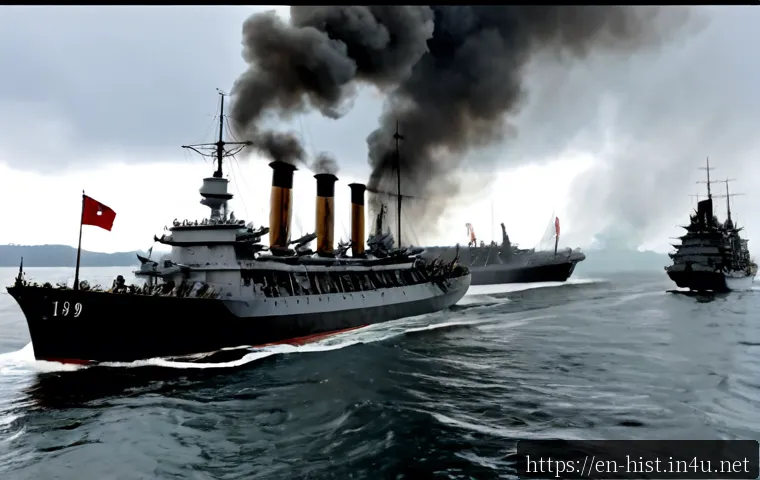
The Russo-Japanese War was fought between the Russian Empire and Japan from 1904 to 1905. Its main setting was the contest over interests in Korea and Manchuria. Japan’s major military successes included Port Arthur, Mukden, and Tsushima.
The conflict ended with the Treaty of Portsmouth in 1905, negotiated with U.S. mediation. Japan’s victory was widely viewed as a major challenge to assumptions that European military powers were inherently superior to non-European states.
Comparison Table: Goals, Military Settings, Outcomes, and Territorial Effects
For basic study, use a four-part comparison: opponents, geography, treaty, and consequence. This approach is more reliable than trying to memorize every event at once. It also makes a documentary, museum timeline, or academic history book easier to evaluate.
Be careful with simple explanations of victory. Historians continue to debate the relative importance of military technology, logistics, leadership, and diplomacy. Neither war should be reduced to one cause or one decisive factor.
Causes and Strategic Stakes in East Asia
The Weakening Qing State and Japan’s Growing Regional Ambitions
The First Sino-Japanese War is often studied as a turning point in the relationship between Qing China and Japan. Japan’s victory and the Treaty of Shimonoseki produced concrete political and territorial consequences. Still, readers should avoid treating the war as the inevitable result of a single national weakness or strength.
An introductory history book should clearly distinguish between documented treaty terms and broader historical interpretation. For deeper research, compare academic works that explain different views of the conflict’s causes.
Russian Interests in Korea and Manchuria
The Russo-Japanese War involved competing Russian and Japanese interests in Korea and Manchuria. This made it a wider regional conflict than a simple bilateral dispute. Maps are particularly valuable because Port Arthur, Mukden, Korea, and Manchuria can otherwise become disconnected names on a page.
When choosing an online history course or research tool, look for materials that connect military events with diplomacy and regional consequences rather than presenting battle lists alone.
Korea’s Strategic Importance and the Limits of Great-Power Narratives
A comparison focused only on Qing China, Russia, and Japan can overlook Korea’s importance. Korea was directly affected by the outcomes of both wars, and Japan’s strengthened position there eventually led to formal annexation in 1910.
Important caution: Korea should not be described as merely a passive prize in a contest between larger powers. A careful course, museum guide, or scholarly source should address how international rivalry affected Korea itself.
Military Results and Political Consequences
The Treaty of Shimonoseki and the Shift in Chinese-Japanese Relations
The Treaty of Shimonoseki ended the First Sino-Japanese War in 1895. Its terms included Qing recognition of Korea’s independence, the cession of Taiwan and the Penghu Islands to Japan, and a large indemnity.
For learners, the treaty is the key evidence for understanding why the conflict mattered beyond the battlefield. A treaty-focused chapter in a history book can be more useful than a short summary that lists only dates.
Port Arthur, Mukden, Tsushima, and the Treaty of Portsmouth

Port Arthur, Mukden, and Tsushima are the major military names most closely associated with Japan’s successes in the Russo-Japanese War. The war ended through the Treaty of Portsmouth in 1905, with U.S. mediation.
These events should be studied together, but not confused. Battles explain part of the military story; the peace settlement shows how the conflict was brought to a close. A detailed battle map can add value for readers who want to follow the geography step by step.
How the Wars Changed Japan’s International Status
Japan’s victories over Qing China and then Russia strengthened its position in East Asia. The victory over Russia also had broader symbolic importance because it challenged widely held assumptions about European military superiority.
Military success did not operate separately from diplomacy. Treaties, international mediation, and changing regional relationships all shaped the final consequences.
Common Mistakes When Comparing These Conflicts
Confusing the Wars’ Dates, Opponents, and Peace Settlements
Use this memory check: 1894–95 means Qing China and Shimonoseki; 1904–05 means Russia and Portsmouth. This simple pairing prevents the most common timeline mistake.
Overlooking Korean Agency and the Impact on Local Populations
It is incomplete to describe both wars only as contests among empires. Korea was central to the conflicts and was profoundly affected by their outcomes. Choose learning resources that place Korean history within the comparison rather than treating it as a footnote.
Assuming Military Victory Alone Explains Diplomatic Outcomes
Battlefield results mattered, but diplomacy mattered as well. The Treaty of Shimonoseki and the Treaty of Portsmouth are essential to any accurate comparison. Interpretations of technology, logistics, leadership, and diplomacy vary among historians, so readers should compare more than one serious source.
Choosing Reliable Learning Resources and Comparison Summary
Selection Criteria for Introductory Books, Academic Works, Maps, and Online Courses
Choose an introductory history book if you need a clear timeline, basic terminology, and treaty summaries. Choose academic works if you need competing interpretations of causes, diplomacy, or military effectiveness. Choose historical maps when place names and campaign geography are difficult to visualize.
An online course is useful when it includes primary-source discussion, regional context, and clear separation between factual evidence and interpretation. For advanced work, archival databases and university research tools can help readers examine documents more closely.
When a Museum Guide, Documentary, or University-Level Source Adds Value
A museum guide can help travelers and general readers connect artifacts, maps, and timelines. A documentary can be a good introduction, but it should be checked against a reliable history book or university-level source. For research papers, prioritize sources that identify their evidence and make their interpretive choices clear.
Final Comparison Checklist for Study and Research
Before choosing a book, course, map set, or research database, check whether it covers the following:
- Dates: 1894–95 versus 1904–05.
- Opponents: Qing China versus Russia.
- Geography: Korea in both wars, with Manchuria especially central to the later war.
- Treaties: Shimonoseki versus Portsmouth.
- Consequences: Japan’s stronger position in Korea and wider changes in East Asian politics.
For course content, map collections, museum guides, or academic research tools, check the official description and source list on the relevant page before choosing.
Conclusion
The First Sino-Japanese War and the Russo-Japanese War were separate conflicts, but they formed a connected sequence in East Asian history. Japan first defeated Qing China and later defeated the Russian Empire, with Korea at the center of both struggles. The treaties matter as much as the battles because they reveal the political consequences of each war. A strong comparison keeps Korea, Manchuria, diplomacy, and historical interpretation in view at the same time.
Useful Information to Remember
Timeline shortcut: Shimonoseki belongs to 1895, while Portsmouth belongs to 1905.
Geography shortcut: Korea is essential to both wars; Manchuria is especially associated with the Russo-Japanese War.
Research shortcut: Use maps for locations, books for context, and academic databases for deeper evidence-based study.
Important Notes
Exact casualty totals vary by source and methodology. Historians also disagree about the relative weight of technology, logistics, leadership, and diplomacy. Neither conflict has one single cause accepted by every historian, so broad claims should be checked against reliable scholarly sources.
Frequently Asked Questions
Q1. What is the simplest difference between the First Sino-Japanese War and the Russo-Japanese War?
A1. The First Sino-Japanese War was Japan versus Qing China in 1894–95. The Russo-Japanese War was Japan versus the Russian Empire in 1904–05. The first ended with the Treaty of Shimonoseki, and the second ended with the Treaty of Portsmouth.
Q2. Why was Korea important in both wars?
A2. Both conflicts were closely tied to influence in Korea. Their outcomes strengthened Japan’s position there, and Japan formally annexed Korea in 1910.
Q3. What are the best types of resources for studying these wars accurately?
A3. Beginners may benefit most from an introductory history book, a clear timeline, and historical maps. Advanced readers should compare academic books, university courses, museum materials, and archival databases that distinguish evidence from interpretation.